Finding your “voice” in photography is one of the most challenging, yet most important tasks facing every photographer. In an era where technical capabilities are accessible to almost everyone, the ability to create a truly recognizable and individual image becomes a decisive factor for success and self-realization. The bur4ik.ru blog presents a comprehensive guide to help you journey from imitation to acquiring a unique authorial vision.
Why Finding Your Voice in Photography is Important: From Imitation to Recognition
What is a “voice” in the context of photography? It’s not just a set of technical tricks or a preferred genre. It’s a unique combination of your worldview, emotional response, technical preferences, and method of presenting material. It’s what makes a viewer exclaim upon seeing your work without a signature: “This was shot by [Имя Фотографа]!”
- Imitation at the Start: Most beginner photographers go through a stage of actively copying masters. This is normal – it’s how learning and mastering basic principles happen.
- The Danger of Stagnation: The problem arises when imitation becomes an end in itself, and the photographer doesn’t move forward, getting stuck in someone else’s style.
- Advantages of Your Own Voice:
- Recognizability: Standing out among thousands of other works on social media and portfolios.
- Self-Expression: Deep satisfaction from creativity when the camera becomes an extension of your personality.
- Commercial Value: Clients are looking not just for a technically good photographer, but for someone whose vision matches their needs.
- Examples of Masters: Think of Ansel Adams with his dramatic contrast in landscapes or Steven Meisel with his intimate street portraits. Their “voice” is their brand.
Identifying Your Strengths: What Do You Do Best?
Finding your voice begins with honest self-analysis. You need to understand what truly ignites you, not just what’s “fashionable” to shoot today.
Self-Analysis Exercises
Set aside time to meditate on your own work. Ask yourself the following questions:
- Genre Preferences: In which genres do you feel most natural (portrait, landscape, documentary, street)?
- Emotional Response: What subjects evoke the strongest emotional response in you during a shoot? This could be melancholy, delight, curiosity.
- Visual Preferences:
- What colors dominate your favorite shots (warm, cool, monochrome)?
- What composition feels intuitively right to you (centering, rule of thirds, symmetry)?
- Do you prefer sharp details or soft focus (bokeh)?
Analyzing Your Best Work
Select 10-15 of your strongest photographs, in your opinion. Ignore those you took for someone else. Only look at those that bring you pride.
- Finding Common Denominators: List the technical and stylistic features that repeat in these works. This could be a specific type of light, an angle, the model’s relation to the camera.
- Differentiating Yourself: Compare these 15 works with those of your idols. What do they have that others don’t? This is your territory.
- Feedback: Ask trusted colleagues or mentors to name three adjectives that best describe your portfolio. Their external perspective often sees what you miss yourself.
Inspiration vs. Copying: How to Draw Ideas Without Losing Yourself
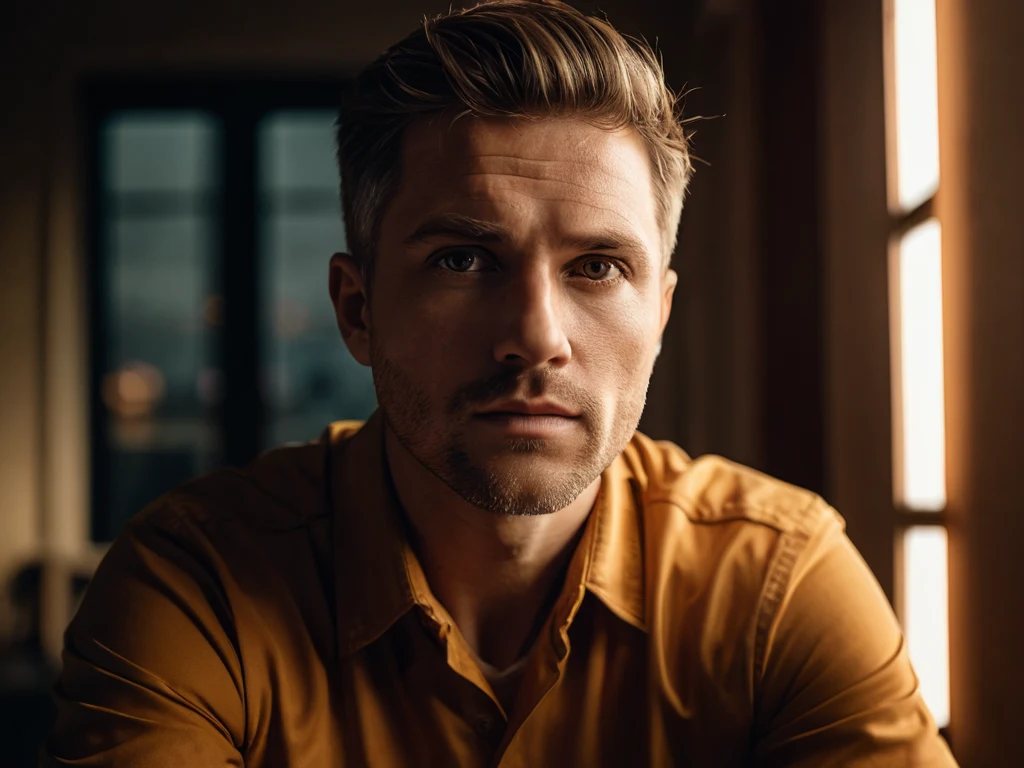
The line between respectful analysis and unhealthy imitation is very thin. The goal is to understand *how* a master achieved a certain effect, not *what* they shot.
Analyzing Others’ Work
Use the work of others as textbooks, not templates:
- Focus on the “Why”: Why did this photographer choose this particular angle? What story did they want to tell with this light?
- Deconstruct: Break down a favorite work into its components: light, color, pose, moment. Try to reproduce just one element in your own environment.
- Look for Gaps: If you like style X, consider what it would look like in genre Y, where it hasn’t been applied yet. This is the path to synthesis and originality.
Finding Inspiration Outside of Photography
A truly unique voice often emerges at the intersection of disciplines. Your vision should be enriched by your entire cultural experience.
- Painting: Study Rembrandt (chiaroscuro), the Impressionists (color and atmosphere), the Minimalists (space). How would you “paint” this frame on film?
- Cinema: Directors are masters of framing and mood. Analyze the cinematography of Wes Anderson (symmetry and pastels) or Denis Villeneuve (atmosphere and scale).
- Music and Literature: Try shooting a series inspired by a favorite music album or book chapter. What visual images does the narrative evoke for you?
Creating Mood Boards
Mood boards are your personal archive of visual desires. They should include not only photographs but also magazine clippings, fabric samples, quotes, and sketches. Review them regularly to reinforce your desired direction.
Experimenting with Technique and Style: Expanding the Boundaries of What’s Possible
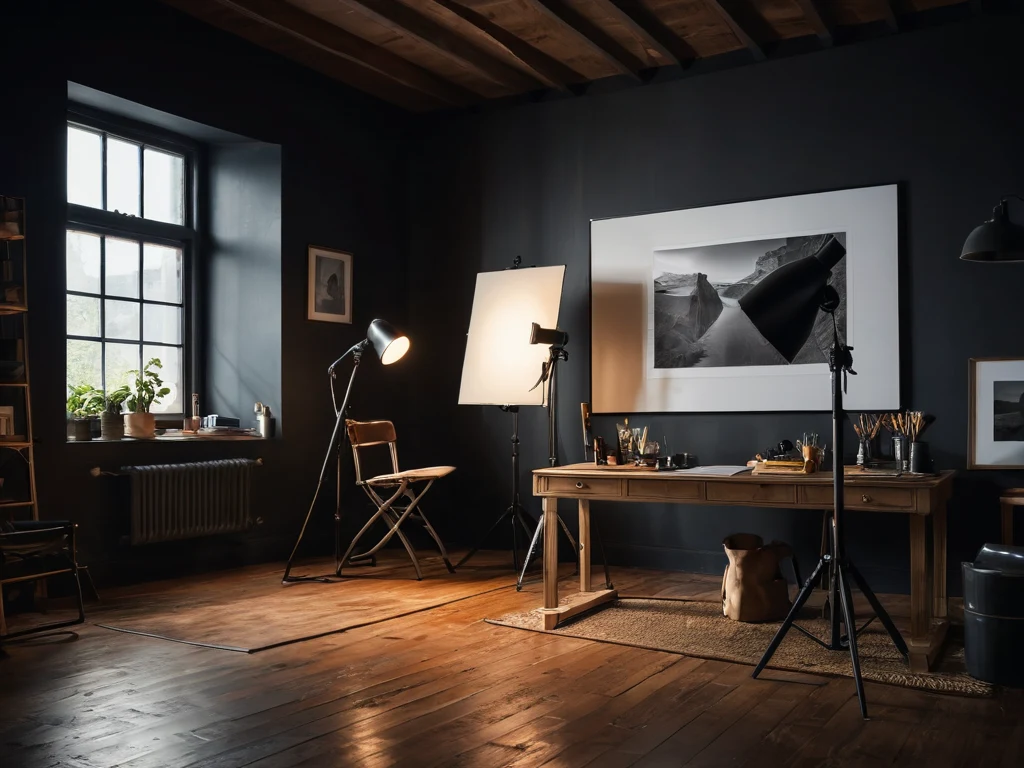
A voice is formed not only by *what* you shoot but also by *how* you technically achieve it. Limitations often breed creativity.
Technical Experiments
Consciously limit yourself for a few shooting sessions:
- Working with Shutter Speed: Try shooting only at 1/15 sec (for street) or only at 30+ seconds (for landscapes).
- Depth of Field: Shoot only at the widest aperture (f/1.4, f/1.8) or, conversely, only at f/16 and above.
- Focal Length: Limit yourself to one prime lens – 35mm or 85mm – and force yourself to work only with it for a month.
- Film Effect: Try shooting with strong overexposure or, conversely, underexposure, mimicking the characteristics of film exposure.
Working with Lighting
Light is the language of photography. Your voice can be in how you “read” it.
- Natural Light: Shoot only during the “golden hour,” only in cloudy weather, or only in rooms with a single window.
- Artificial Light: Try mastering the single light source technique (key light) or use colored gels to create a dramatic atmosphere.
- Chiaroscuro: How do you use shadows? Are they as important elements of the frame as the light areas?
Post-Processing as a Signature
Post-processing is the final stage where your voice is solidified with color and tone. If your voice is “melancholy vintage,” it should be evident in every work.
- Color Palette: Define your palette: for example, muted blue-green tones, or, conversely, high-contrast orange-blue combinations.
- Working with Curves: How do you process black and white? “Crushed” blacks (raised black level) or hard, “blown-out” black?
- Retouching: How much do you “clean” the frame? A minimalist approach in documentary or a complete overhaul in fashion portraiture?
The Importance of Stepping Out of Your Comfort Zone: Don’t be afraid of failure. Only by trying polar opposite approaches will you understand what resonates with you.
Developing Conceptual Thinking: Telling Stories Through Photographs
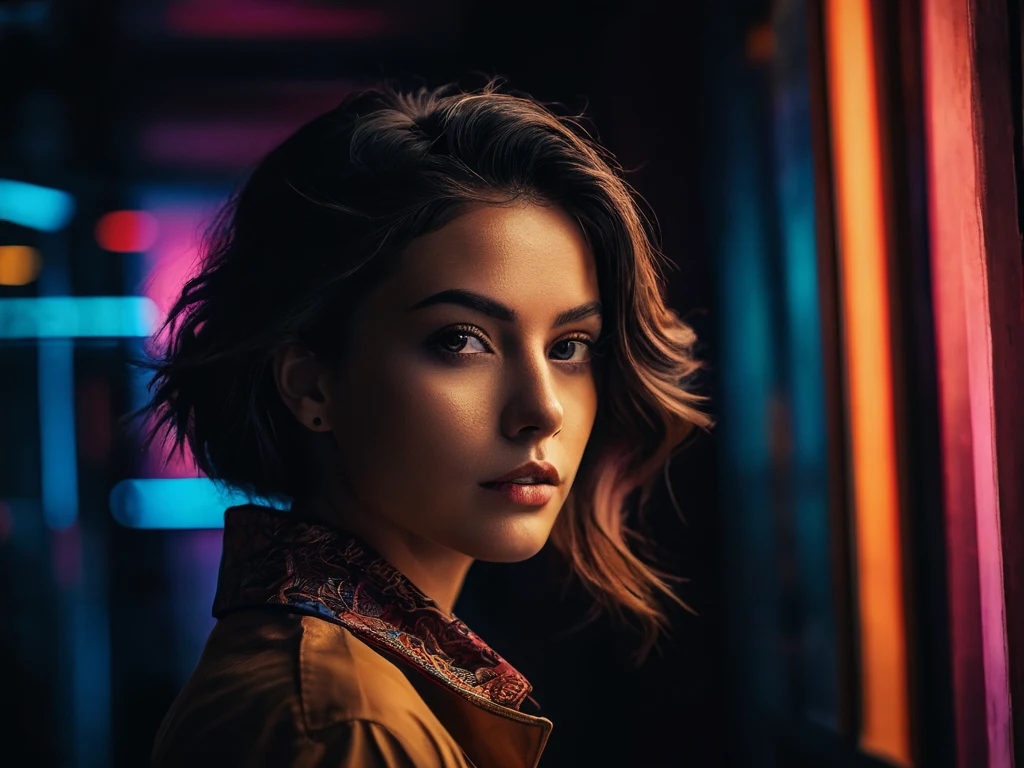
Technique and aesthetics are important, but a true voice is about *what* you are saying. Photography without a concept is a beautiful shot; photography with a concept is a statement.
From Shot to Narrative
Ask yourself: if this shot could only be seen once, what would I want the viewer to feel or understand?
- Using Metaphors: Instead of directly shooting a person’s grief, use a metaphor – for example, an empty room, an old, forgotten object.
- Symbolism: What objects constantly appear in your work? If it’s water, what does it symbolize for you (cleansing, movement, oblivion)?
- Working with Emotions: Focus on conveying one dominant feeling in a series.
Working on a Series
Rarely does someone’s voice reveal itself in a single frame. It manifests in context.
- Beginning, Middle, End: Even if you shoot street photography, create a story within the set (e.g., the start of the day, the climax, the conclusion).
- Consistency: How do the frames relate to each other in terms of color, rhythm, mood? Create internal rules for ordering the series.
- Connecting Thread: This could be a common color filter, a recurring motif (e.g., shadows on a wall), or a general theme (e.g., loneliness in a metropolis).
Conceptual Photography
If you are drawn to conceptual photography, it’s important that your technical execution doesn’t overshadow the idea. Here, your voice is your philosophical or social statement. Study the works of Cindy Sherman (exploration of identity) or Andreas Gursky (scale and modern society) to see how form serves purpose.
Practical Steps to Finding Your Voice: Action Plan and Constant Practice
Finding your voice is not an epiphany, but a disciplined process requiring regularity and patience.
Regular Shooting and Experimentation
Practice should be purposeful:
- Daily Challenges: Set a rule for yourself – shoot at least 10 meaningful frames every day, even if they are just objects around the house.
- “Project 365” (with purpose): If you choose a year-long project, make sure it’s aimed at *exploring* your style, not just checking a box.
- Documenting the Process: Keep notes during your shoots: what worked, what caused resistance, what yielded unexpected results.
Portfolio and Feedback
Your voice needs to be heard so you can refine it.
- Portfolio Website: Create your own website (not just a social media account). This forces you to be more critical when selecting works, as you choose the best 20 out of 2000.
- Regular Audit: Quarterly, ruthlessly remove everything from your portfolio that seems outdated, imitative, or technically weak.
- Community Participation: Post on forums where constructive criticism is given. Seek criticism on style (“How does this look in the context of my work?”), not just technique (“Is the focus set correctly?”).
Learning and Patience
The journey to your own style can take years. Be prepared for this.
- Workshops: Attend masterclasses by artists whose style you respect, but don’t try to copy them; instead, *integrate* their lessons into your practice.
- Reading: Study the history of photography. Understanding what has been done before you will help you avoid well-trodden paths.
- Patience: A true, mature voice often emerges after you’ve mastered the technique (2 to 5 years of intensive practice) and gone through several creative crises.
Finding your voice is a journey of self-discovery, where the camera acts as a mirror. The bur4ik.ru blog wishes you the courage to experiment and the persistence to find that unique perspective on the world that belongs only to you.