In the world of professional photography, the final result always depends on the coordinated work of a team. And although the photographer is the conductor of this orchestra, the two key figures who determine the visual perfection of the frame are the makeup artist and the stylist. Their joint work, based on a deep understanding of the concept and mutual respect, transforms an ordinary shoot into a work of art. When makeup, hair, clothing, and accessories work in unison, the model looks not just good, but perfect, and the photographer gets material that requires minimal post-processing.
The Synergy of Beauty: Why a Makeup Artist and Stylist are the Perfect Team for a Photoshoot
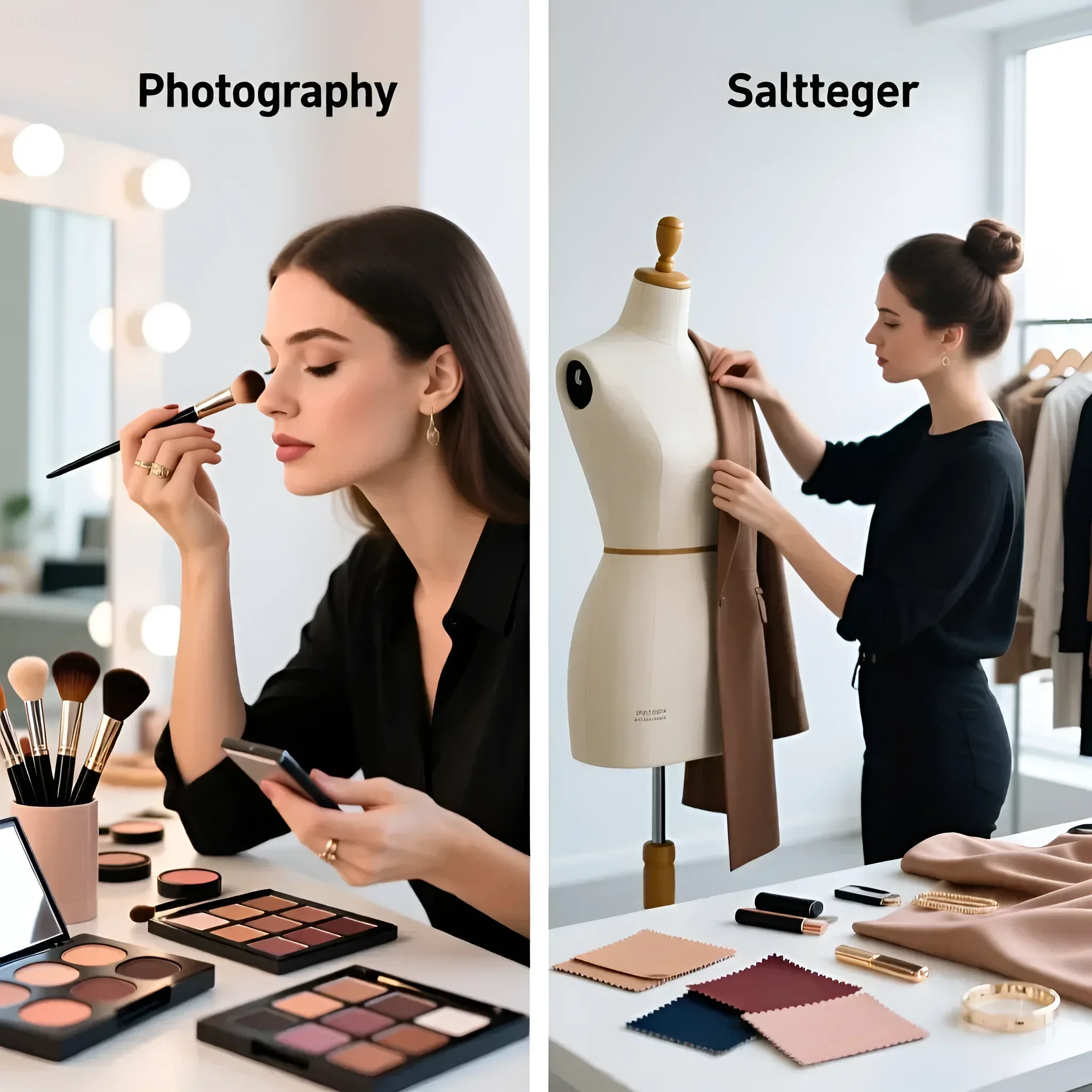
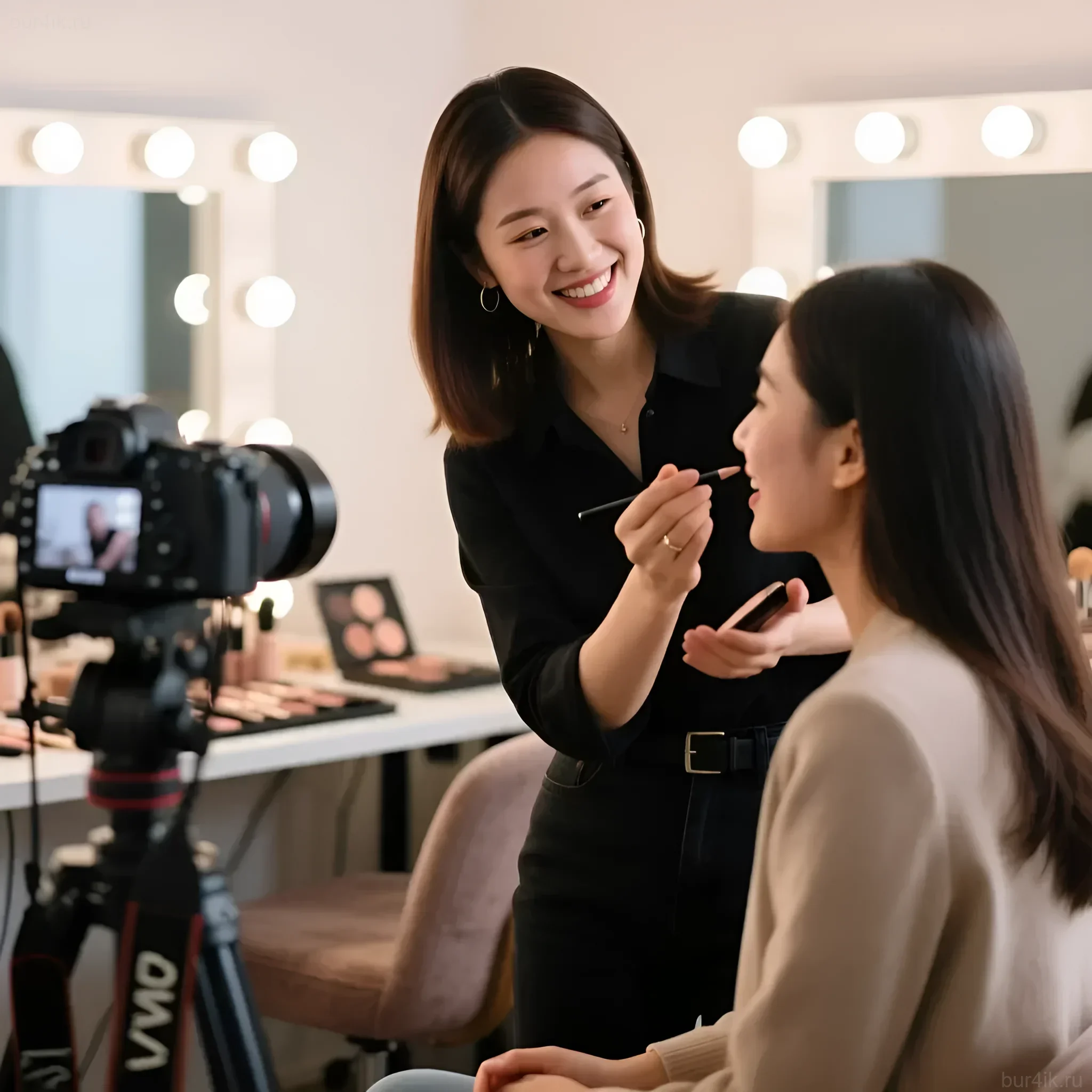
The synergy between a makeup artist (MUA) and a stylist (Fashion Stylist) is not just a convenience, it’s a strategic necessity. A lack of coordination between these specialists often leads to visual dissonance, which can completely ruin even the strongest photoshoot concept. Experts from bur4ik.ru emphasize that their joint work is an investment in quality and speed of the process.
Key advantages of working in tandem:
- Unified Concept: They work from the same mood board, ensuring stylistic unity. If the stylist has chosen a vintage 60s look, the makeup artist won’t create a futuristic makeup.
- Time Saving: When specialists are familiar with each other, they know how to change looks quickly. The stylist prepares the clothing for the next outfit while the makeup artist makes minimal adjustments to the makeup or hair.
- Harmony of Textures and Colors: The stylist considers how fabrics will reflect light, and the makeup artist selects foundations and highlighters so they don’t clash with the texture of the clothing.
- Lighting Optimization: The makeup artist knows in advance what type of lighting the photographer will use and selects makeup that will look flattering (e.g., matte textures for harsh light or glossy for soft light).
Roles in the Team: Makeup Artist and Stylist – Who is Responsible for What?
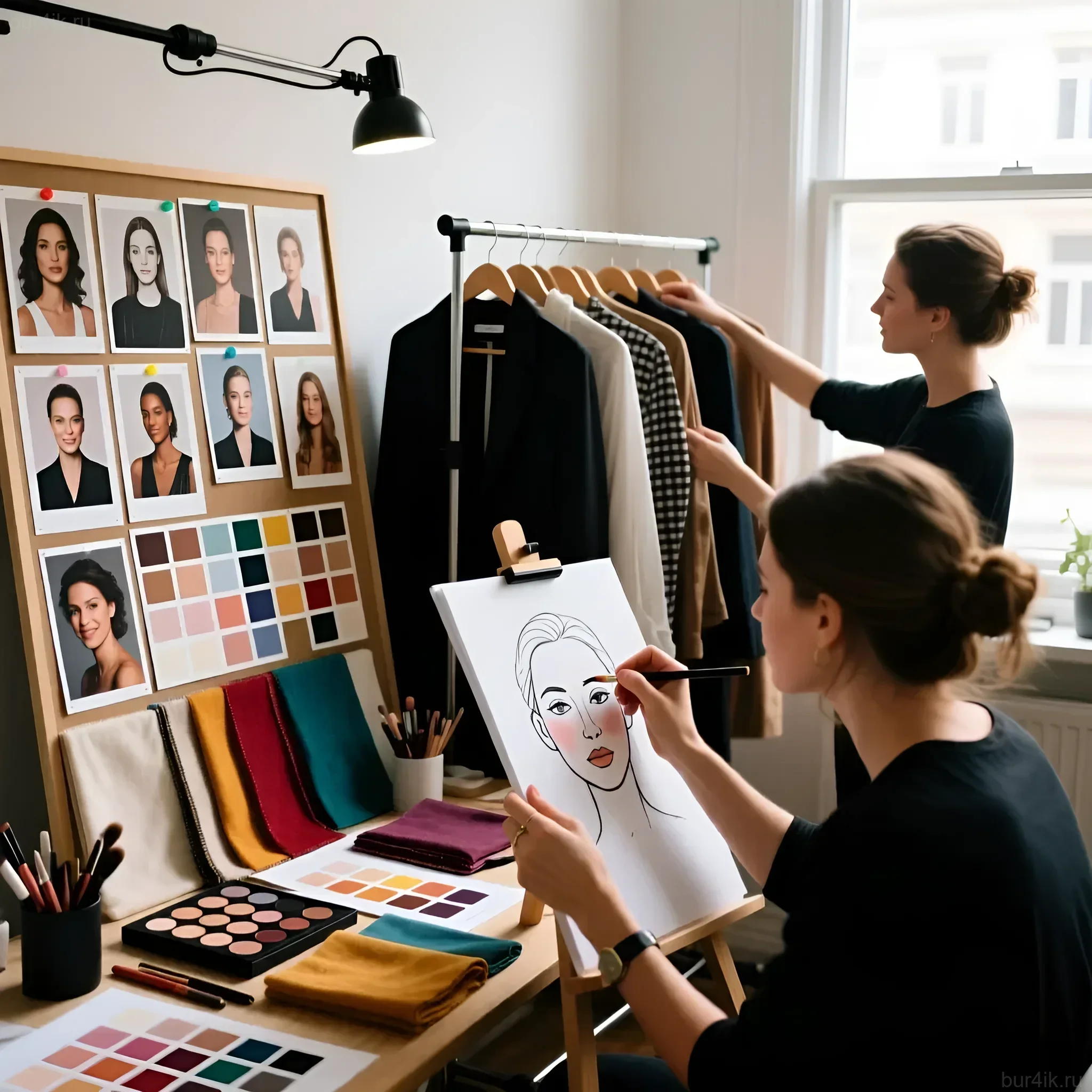
Clear delineation of responsibilities is critical to prevent conflicts and overlaps. Although their work is closely related, the areas of responsibility are strictly defined.
Makeup Artist (MUA)
The MUA is responsible for everything concerning the model’s appearance from the neck up, as well as skin condition and small details that will be visible in close-ups.
- Face and Skin: Creating a perfect complexion, contouring, addressing problem areas (concealing dark circles, redness, tattoos).
- Makeup: Applying makeup strictly according to the concept, selecting a color palette that harmonizes with the clothing and lighting.
- Hair: Often, the makeup artist or their assistant takes on the role of a hair stylist, responsible for the hairstyle, styling, and setting.
- On-Set Support: Monitoring the condition of makeup and hair during the shoot, promptly addressing shine, sweat, or stray strands.
Stylist (Fashion Stylist)
The stylist is the architect of the look. Their task is to select, prepare, and organize all the material elements that form the model’s appearance and tell a story.
- Clothing and Wardrobe: Selecting outfits, renting or purchasing clothing, checking sizes, ensuring concept compliance.
- Accessories: Choosing shoes, jewelry, bags, hats. These can be key accents or subtle but important details.
- Preparation: Ironing, steaming, cleaning clothes before the shoot. Stylish clothing must look impeccable.
- On-Set Organization: Creating order in the wardrobe, assisting the model with changing, ensuring that the clothing fits perfectly in the frame (using pins, clips).
Photoshoot Preparation Stages: How Do a Makeup Artist and Stylist Work Together?
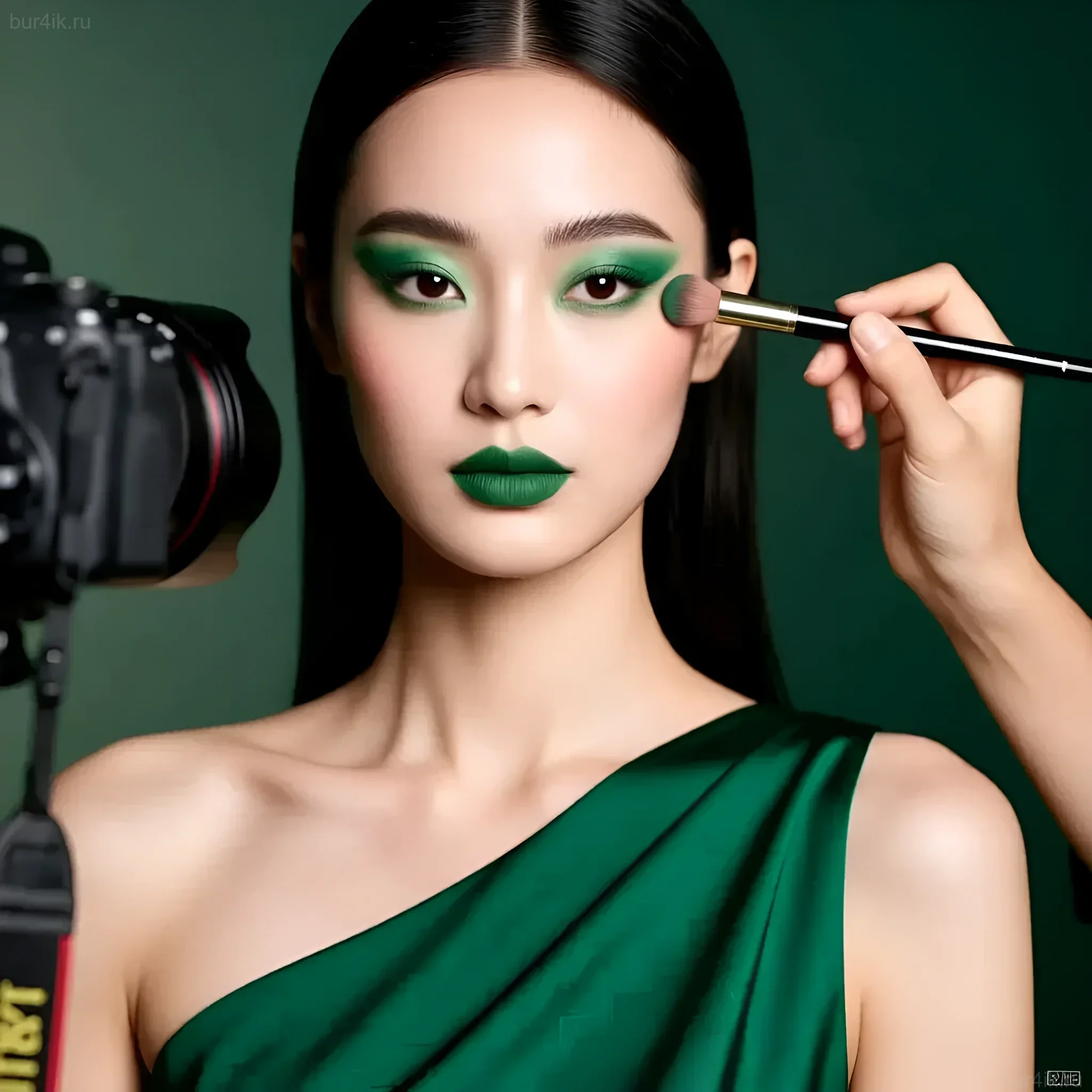
Effective interaction begins long before the shooting day. Professionals follow a clear algorithm to minimize stress and errors.
1. Conceptualization and Mood Board (2–3 weeks prior)
The photographer, stylist, and makeup artist hold a joint briefing. The mood, location, color palette, and number of looks are discussed.
- Stylist: Proposes specific outfits, fabrics, silhouettes.
- Makeup Artist: Suggests makeup and hairstyle options, considering the complexity of the looks and the time required for outfit changes.
- Result: Creation of a shared digital mood board (e.g., on Pinterest or Miro), clearly showing which makeup corresponds to which outfit.
2. Fitting and Testing (1 week prior)
This is a critically important stage, especially for complex or commercial shoots. If the model is new, a test fitting is conducted.
- Stylist: Checks how the clothes fit and makes adjustments.
- Makeup Artist: Conducts a test makeup (if necessary) to ensure the model’s skin reacts well to the cosmetics and that the chosen colors complement the fabric shades.
- Detail Coordination: At this stage, the MUA and stylist finalize details, such as whether the stylist’s earrings will match the type of bun chosen by the makeup artist.
3. Shooting Day: Synchronization
On set, work is carried out in parallel and sequentially.
- Morning: The MUA starts first. The stylist, meanwhile, prepares the first look, steams it, and lays out accessories.
- Transition Between Looks: While the model is changing (stylist’s work), the makeup artist makes changes to the makeup (e.g., transforming daytime makeup into evening, or changing the hairstyle). This allows for no loss of shooting time.
Creating a Harmonious Look: Color Palette, Style, and Concept
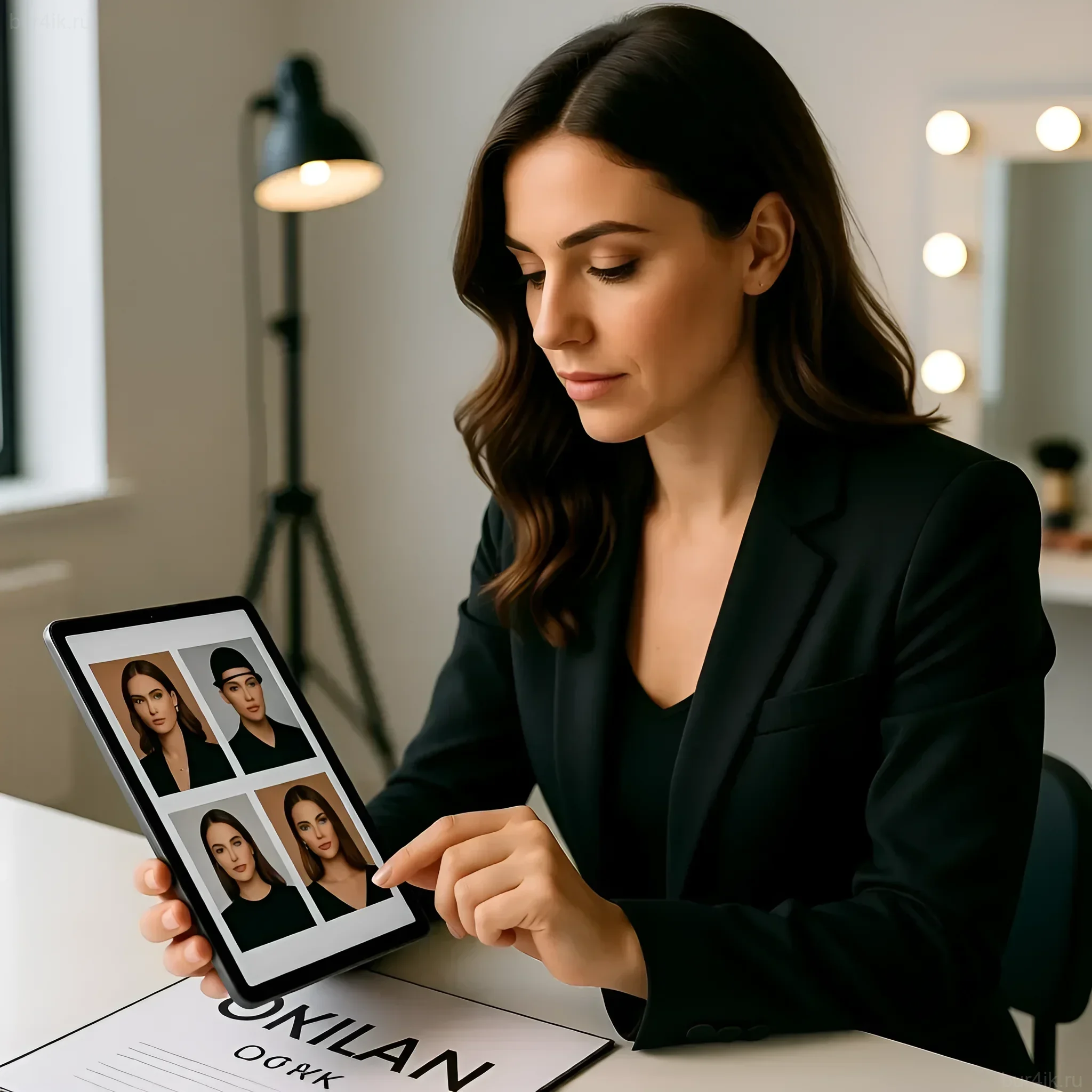
The harmony of a look is more than just matching colors. It’s a balance of textures, intensity, and overall mood. Mistakes at this stage often require costly retouching.
Color Interaction
Makeup artists and stylists must know the basics of the color wheel and understand how colors interact in a frame.
- Temperature: If the stylist has chosen clothing in cool tones (blue, emerald), the makeup artist should avoid overly warm shades of blush or lipstick to prevent conflict. The exception is the deliberate creation of contrast.
- Accents: If the stylist uses a bright accent (e.g., a neon belt), the makeup artist can either repeat this color in the eye makeup (for a bold look) or, conversely, choose neutral makeup to avoid overloading the frame.
- Background: Both specialists consider the color of the background or location. Light clothing and makeup can get lost against a bright background, while dark colors can create unnecessary heaviness.
Balance of Textures
Texture is how light interacts with a surface. It must be coordinated.
- Matte and Glossy: If the stylist uses a lot of glossy, satin, or patent materials, the makeup artist can opt for matte skin and lips to balance the abundance of shine. Conversely, for matte, wool, or tweed looks, light, radiant skin is appropriate.
- Fabric Texture: Rough textures (leather, denim) often require bolder, more graphic makeup, while light, flowing fabrics (silk, chiffon) pair better with soft, airy makeup.
Practical Tips: How to Find the Perfect Makeup Artist and Stylist for a Photoshoot
Finding the ideal tandem requires careful review of portfolios and understanding their workflow. Here are the key selection criteria.
1. Portfolio Review and Specialization
- Collaborative Works: Look for examples of their joint projects in portfolios. If they have already worked together, it’s a huge plus for speed and quality.
- Specialization: Ensure their specialization matches your task. If you need an advertising shoot for jewelry, look for specialists who have worked in the commercial sector, not just in beauty or wedding industries.
- Diversity: Assess the diversity of their work. Can they create both minimalist and complex, dramatic looks?
2. Communication and Personal Qualities
On set, not only talent but also personality is important. Professionals must be stress-resistant and results-oriented.
- Brief Clarity: An ideal specialist should be able to ask many clarifying questions about the brief and not hesitate to offer their ideas.
- Punctuality: Time is the most valuable resource on a shoot. Check reviews about their punctuality and organization.
- Availability of an “Emergency” Kit: A good stylist always has a kit for emergency clothing repairs (thread, needles, double-sided tape), and a makeup artist has tools for quick corrections (blotting papers, setting sprays).
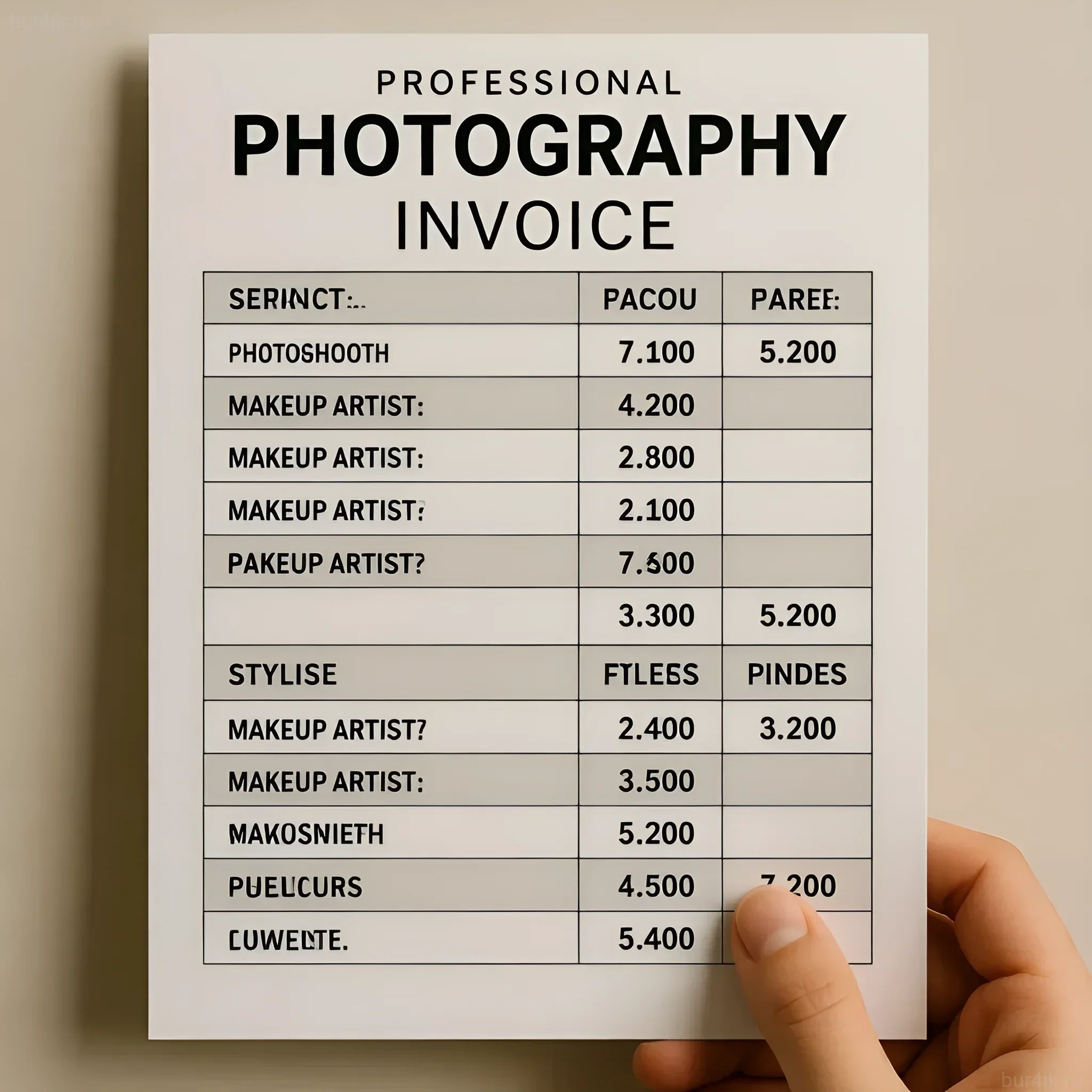
Photoshoot Budget: How Much Do Makeup Artist and Stylist Services Cost?
The cost of MUA and stylist services can vary greatly depending on their experience, region of work, and project complexity. It’s important to understand exactly what you are paying for.
Factors Affecting Cost
Professional rates are usually divided into three categories: beginner, intermediate, and top specialist (working with magazines and major brands).
| Factor | Impact on Price |
|---|---|
| Duration of Work | A full day (8–10 hours) is always more expensive than hourly pay or a per-look rate. |
| Complexity of the Look | Complex creative makeup or work with wigs and prosthetics increases the bill. |
| Wardrobe Rental | Stylist services often include the cost of renting clothing, especially if designer items are involved. |
| Presence of an Assistant | For large projects, the stylist and makeup artist may work with assistants, which also affects the final estimate. |
Important Note: Do not skimp on professionals. Poor quality makeup or ill-fitting clothing will require many hours of Photoshop retouching, which may ultimately be more expensive than the initially high rate of experienced specialists.
FAQ: Answers to Popular Questions About the Work of a Makeup Artist and Stylist
Q: Should a makeup artist also do hair?
A: In commercial and fashion photography, a separate hair stylist is often hired. However, for smaller projects or private photoshoots, the makeup artist often performs both functions if agreed upon in advance. Always clarify if hairstyling is included in their price.
Q: What to do if the stylist brings clothes that don’t fit the model?
A: This is a common problem if there was no prior fitting. A professional stylist always has a “Plan B” and a set of corrective tools (pins, clips, adjustments). The main thing is to stay calm. The makeup artist, in this case, should be ready to quickly adjust the makeup if the model’s pose or lighting has to be changed due to an ill-fitting cut.
Q: Who is responsible for makeup accessories (e.g., rhinestones or false eyelashes)?
A: This is the makeup artist’s area of responsibility. All consumables applied to the skin or hair are included in their professional kit. The stylist is only responsible for accessories that are part of the wardrobe (jewelry, hats).
Q: Can a photographer choose clothing and makeup colors?
A: The photographer sets the overall mood and technical parameters (lighting, composition). But it is the stylist and makeup artist who are experts in color, textures, and fit. It’s best if the photographer approves the final mood board but trusts the professionals with the implementation details.
Interesting Facts: Behind the Scenes of Fashion Photography
The work of makeup artists and stylists is full of nuances that remain invisible to the viewer. These details often determine the success of the entire shoot.
- The “Three Layers” Rule: Professional makeup artists use multiple layers of foundation to make the skin look perfectly smooth and withstand bright studio lighting without glare.
- Body Work: Stylists often work not only with clothing but also with the model’s body. For glossy shoots, special lotions, oils, or sprays are used to give the skin a radiant and voluminous effect.
- “Styling” Tricks: In fashion photography, things rarely fit perfectly. Stylists use dozens of invisible clips, tape, and pins to create the desired silhouette. In reality, a dress might only stay on the model due to these devices.
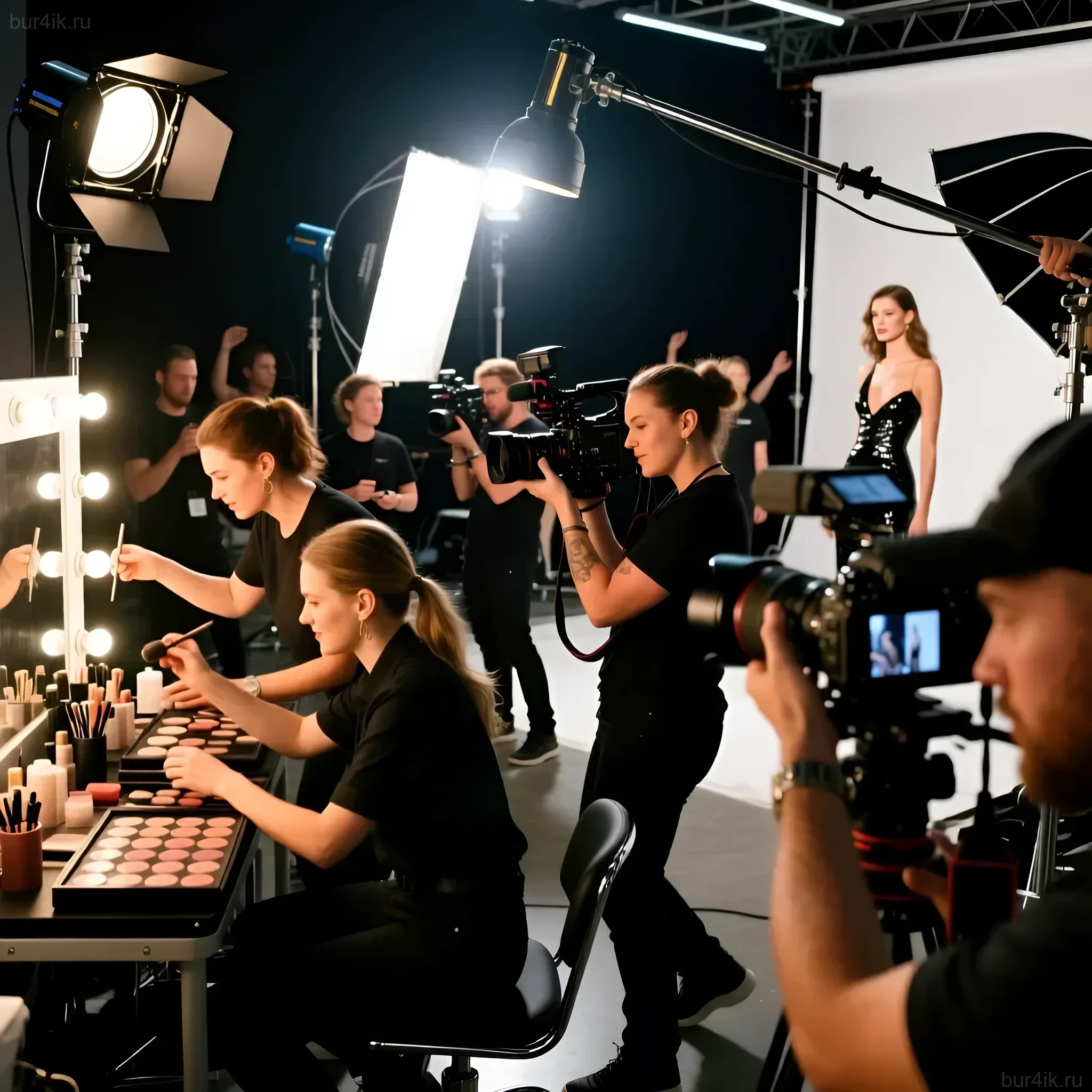
- Outfit Change in 5 Minutes: At fashion shows and large advertising shoots, makeup artists and stylists can work on a model simultaneously. The stylist changes shoes and accessories while the makeup artist quickly corrects lips and eyes. This requires maximum coordination and no personal space.
- “Wet” Face Effect: If a sweaty or damp effect is required in a photo, makeup artists use a mixture of glycerin and water, not just water, because glycerin does not evaporate as quickly under studio lights.
In conclusion, the perfect tandem of a makeup artist and stylist is not just two separate services, but a single creative mechanism. By investing in their coordinated work, the photographer and client guarantee not only flawless shots but also an efficient and enjoyable shooting process. It is in this synergy that true visual magic is born.