Visual content is one of the most powerful tools in the arsenal of charitable organizations. High-quality, emotionally rich, and professionally executed photographs can not only draw attention to a problem but also mobilize the public to provide assistance. A photographer’s collaboration with charitable foundations is not just volunteering; it’s a strategic partnership that requires a deep understanding of ethics, legal nuances, and effective PR strategies. This material is a comprehensive guide for photographers who wish to use their skills in the service of good, while maximally protecting themselves and their subjects.
Photography in the Service of Good: Why Photographers Should Collaborate with Charitable Foundations
For a professional photographer, working with the non-profit sector opens up unique opportunities beyond commercial projects. It’s a chance to create a socially significant portfolio and make a real contribution to solving pressing issues.
Collaboration with charitable organizations offers photographers the following benefits:
- Portfolio Expansion: Shoots for foundations often cover complex and emotionally rich genres – reportage, portraiture, documentary. Such works are highly valued in the professional community.
- Social Responsibility: The opportunity to use one’s talent to help vulnerable populations, which enhances personal and professional self-esteem.
- Networking and PR: Foundations have a wide network of contacts, including media, major donors, and opinion leaders. Publishing photos in the context of a large charitable project provides the photographer with additional recognition.
- Skill Development: Working under time constraints, with sensitive topics, and not always ideal lighting conditions fosters rapid growth in professional competencies.
How to Find a Suitable Charitable Foundation for Collaboration: A Step-by-Step Guide

Choosing a partner organization is a critically important step. The photographer must be confident in the foundation’s transparency and mission to avoid discrediting their work.
Steps to Choosing a Foundation:
- Defining Personal Values: Decide which area (children, animals, environment, medicine) is closest to your heart. This will ensure emotional engagement.
- Transparency Research: Check the foundation’s reports on official websites. Request information on how donations are used. Foundations with a good reputation are always open to providing such information.
- Visual Content Analysis: Examine the content the foundation currently uses. If their current photos are of low quality, the need for professional shooting is high.
- Preparing a Proposal: Don’t just offer to “shoot something.” Prepare a specific proposal, such as: “A series of portraits for the annual report” or “Reportage from the Donor Day event.”
- Establishing Contact: It’s better to contact not through a general email, but directly with the PR manager or head of development. In your email, be sure to include a link to your portfolio showcasing relevant genres.
PR and Promotion: How to Use Collaboration with a Foundation to Increase Recognition
Collaboration with a foundation is an excellent PR tool if handled correctly. The main rule: promotion should be mutual and not overshadow the foundation’s mission itself.
Effective PR Strategies:
- Cross-promotion: Agree on the publication of your name and a link to your website/social media when the foundation uses your photos (in reports, press releases, social media). In return, you publish information about the foundation and its mission on your channels.
- Storytelling: Use behind-the-scenes content and personal impressions to create content for your blog. Talk not only about the technical aspects but also about the people you photographed and the foundation’s goals.
- Media Kit: Ensure the foundation includes your biography and a few of your best photos in their media kit for journalists. This increases the likelihood of your name being mentioned in the media.
- Exhibitions and Auctions: Propose a joint photo exhibition with the foundation, where part of the proceeds from print sales go to their cause. This attracts media attention and potential commercial clients.
Photographer’s Ethics When Working with Charitable Foundations: Sensitivity and Respect
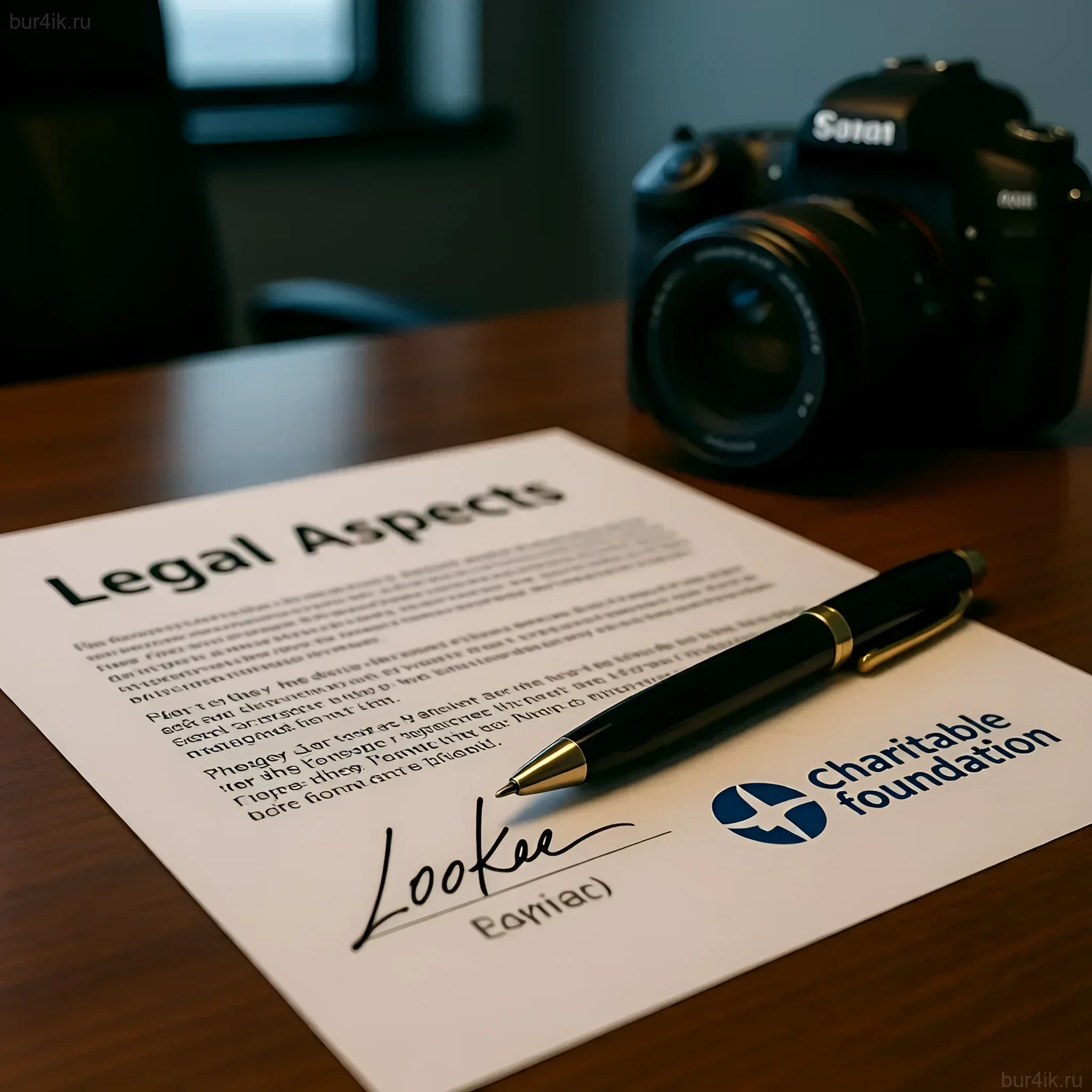
Working with charitable themes requires maximum ethical responsibility. The photographer must remember that they are working with real people, often in vulnerable situations. Exploiting someone else’s suffering for a “strong shot” is unacceptable.
Key Principles of Ethical Shooting:
- Principle of Dignity: Images should not humiliate or evoke pity in a negative sense. Subjects should be portrayed as strong individuals fighting circumstances, not as victims.
- Informed Consent: Obtaining consent is not just a signature on paper. The subject must clearly understand how and where their photos will be used (internet, print, advertising). If the subject is a child, consent is given by parents or legal guardians.
- Context and Accuracy: The photograph must accurately reflect the situation. Staged images of suffering or distortion of facts are unacceptable.
- Working with Vulnerable Groups: When working with the seriously ill, people with disabilities, or victims of violence, it is necessary to work through the foundation’s psychologists or social workers. Sometimes it is better to photograph hands, backs, or use a soft focus to maintain anonymity.
- Avoiding “Poverty Pornography”: Excessive emphasis on suffering that causes shock but brings no benefit often repels the audience and is perceived as exploitation.
Legal Aspects of Collaboration: Contracts, Copyrights, and Image Usage
Legal clarity is the foundation for long-term and secure collaboration. Even if the shooting is done on a gratuitous basis, a contract regulating the rights to use the content must be concluded.
Three Main Legal Documents:
- Collaboration Agreement (or Service Agreement): Regulates the relationship between the photographer and the foundation. It specifies deadlines, technical specifications (TS), number of photos, format of material delivery, and, critically, payment terms (if any) or gratuitousness.
- Assignment or Non-Exclusive Rights Transfer Agreement: Copyright (authorship) always remains with the photographer. However, the foundation must obtain the right to use the photos.
- Model Release: Legal permission from the people depicted in the photographs to use their likeness for the foundation’s purposes.
Rights to Use Images: What’s Important to Specify
The photographer must clearly define what rights they are transferring to the foundation. Typically, this is a non-exclusive license. The agreement must specify:
- Purpose of Use: Only for the foundation’s purposes (reporting, attracting donations, PR). Prohibition of commercial use by third parties.
- Territory of Use: Worldwide or a limited territory.
- Term of Use: Indefinite or a limited period (e.g., 5 years).
- Conditions for Author Attribution: Mandatory mention of the photographer’s name with each publication. Violation of this clause should incur penalties, even if the collaboration was gratuitous.
Important: The foundation must guarantee that they have all necessary Model Releases, especially if the photographer is shooting mass events or vulnerable groups. The photographer is responsible for technical quality, and the foundation is responsible for the legal validity of the subjects’ consent.
Practical Tips: Organizing Shoots, Working with the Foundation Team, and Reporting

A professional approach to organizing a shoot ensures that the results meet the foundation’s expectations and do not cause ethical problems.
Preparation for the Shoot
- Clear Technical Specifications (TS): The foundation should provide a list of required shots, indicating their purpose (e.g., 5 portraits for the website, 10 horizontal shots for banners, 30 reportage shots for social media).
- Briefing: Before the shoot, a meeting should be held with the foundation’s staff who will accompany the photographer. They should know who can and cannot be photographed and be ready to assist in obtaining consent.
- Equipment: Use equipment that allows for quick and unobtrusive work (e.g., fast lenses for shooting without flash indoors).
On-Site Work
Focus on Positivity: Even if the topic is difficult, try to find moments of hope, support, and interaction. This motivates donors rather than demoralizing them.
Respect for Subjects: Never shoot “from above.” Before pressing the shutter, establish contact, explain why you are there, and ask for permission. Do not turn people into objects.
Post-Production and Reporting
- Natural Color Correction: Avoid dramatic or overly dark processing. Photos should be clean, bright, and natural to avoid creating an artificial sense of hopelessness.
- Prompt Delivery of Material: Charitable organizations often need content urgently, especially after events. Adhere to agreed-upon deadlines.
- Acceptance Certificate: Always sign an acceptance certificate for the photos, indicating the number of files transferred and confirming that the TS has been met.
FAQ: Answers to Frequently Asked Questions About Photographer Collaboration with Charitable Foundations
Should a Photographer Work for Free?
Answer: This depends on the agreement and the foundation’s policy. Many foundations have budgets for PR and content. If the foundation can afford to pay for the work, it should be done. If the photographer decides to work for free (pro bono), this should be clearly stated in the contract as gratuitous service provision, while copyright and attribution rights are retained.
What to Do If a Foundation Uses My Photos Without Attribution?
Answer: This is a direct violation of copyright, even if the shoot was free. You must immediately contact the foundation and point to the clause in the contract obligating them to attribute the author. If the foundation refuses, you can use official claims and, as a last resort, legal protection, demanding compensation for the violation of non-pecuniary rights.
Can I Use These Photos in My Commercial Portfolio?
Answer: Yes, as a rule, the photographer retains the right to use the photos in their personal portfolio, at exhibitions, and in contests, provided it does not violate the confidentiality of the subjects. This point should also be specified in the contract.
How to Protect Subjects Who Don’t Want Their Faces Shown?
Answer: Use technical techniques: shooting from behind, focusing on details (hands, objects), strong background blur, or cropping that excludes the face. The foundation can also use digital retouching (blurring or masking faces), but this should be discussed in advance.
Inspiring Examples: Stories of Photographers Who Changed the World with Their Pictures
The history of photography is full of examples of how a single frame can be a catalyst for social change. Photography is not just an illustration; it is evidence and a call to action.
- Documentary Power: Images documenting the aftermath of natural disasters or humanitarian crises often form the basis for global fundraising campaigns. They don’t just show the problem; they personalize it.
- Focus on Resilience: Many successful charitable campaigns are based on photographs that demonstrate not only need but also progress. For example, portraits of children who, thanks to the foundation’s help, were able to get an education or receive treatment inspire donors to provide long-term support.
- Collaboration with Major Media: When photos taken for a foundation appear in leading global publications (as a result of effective PR), it not only increases the foundation’s recognition but also positions the photographer among socially significant authors.
Collaboration with charitable foundations is a complex but incredibly important field for any photographer striving for professional and personal growth. Approaching this process with respect for ethics, attention to legal details, and a strategic approach to PR can lead to amazing results for both the foundation and your own brand.