In today’s world of visual content, clients increasingly expect a comprehensive product: not just high-quality photographs, but also dynamic, emotional video. The era when photographers and videographers worked as competitors on the same set is fading. It’s being replaced by the era of the perfect tandem – a professional, coordinated collaboration that achieves synergy, enhances the quality of the final product, and consequently, increases the average order value and customer loyalty. For a photographer, mastering effective interaction with a videographer colleague is not just desirable, but a critically important element for business development.
1. Why Photographers Need to Collaborate with Videographers: Expanding Horizons
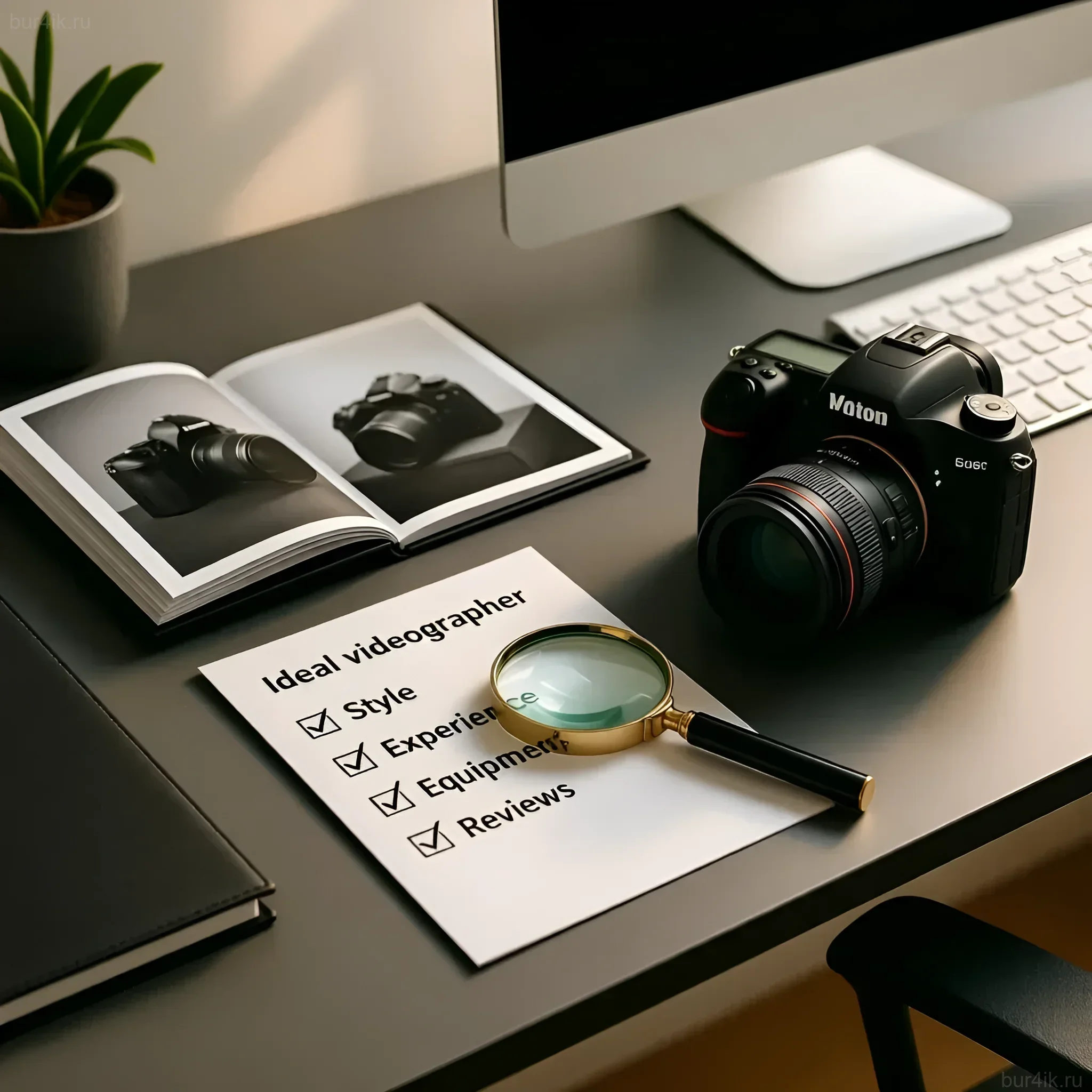
Collaboration with a videographer opens up new professional and financial opportunities for a photographer. It’s not just about exchanging contacts; it’s a strategic partnership that strengthens the positions of both specialists in the market.
Benefits of Working in a Tandem:
- Expanding the Client Base: A videographer can recommend a photographer to their clients, and vice versa. This ensures a steady flow of orders and acts as free marketing.
- Professional Development: Teamwork requires greater discipline, better planning, and the ability to adapt quickly to changing conditions.
- Increasing the Average Order Value: By offering clients a comprehensive “photo + video” package, specialists can set a higher total service cost, which is always more advantageous than ordering two services separately.
- Reducing Stress: Having a reliable partner who understands your workflow alleviates some of the organizational burden and allows you to focus on creativity.
- Comprehensive Portfolio: Showcasing joint projects demonstrates to potential clients that you are capable of working in complex, multi-tasking environments.
2. Finding the Ideal Videographer: What to Look For?

A successful tandem is built on mutual respect, compatibility of styles, and a similar level of technical equipment. Finding the ideal partner means finding someone who complements your strengths, rather than competes with you.
Key Criteria for Choosing a Partner:
1. Compatibility of Styles and Vision
- Aesthetics: Ensure that their color grading, compositional choices, and overall video “atmosphere” do not conflict with your photographic style (e.g., if you shoot classic styles, a partner who works in hyper-lapse and music video styles might not be a good fit).
- Pace of Work: Should the videographer be fast and unobtrusive, or do they prefer long, staged scenes? This should align with your approach.
2. Technical Proficiency and Equipment
- Equipment Level: Assess their gear. Using outdated or significantly different quality cameras can create problems with joint lighting and color work.
- Sound: Having a quality external audio recorder or lavalier microphones for sound recording is a critical indicator of a videographer’s professionalism.
3. Personal Qualities and Communication
- Reliability: A partner should be punctual, responsible, and keep their promises.
- Communication Skills: The ability to get along with clients and, equally importantly, with you, is the foundation of long-term cooperation.
- Absence of “Star Syndrome”: There should be no competition for client attention or the best angle on set.
3. Planning a Joint Shoot: Secrets of Effective Preparation
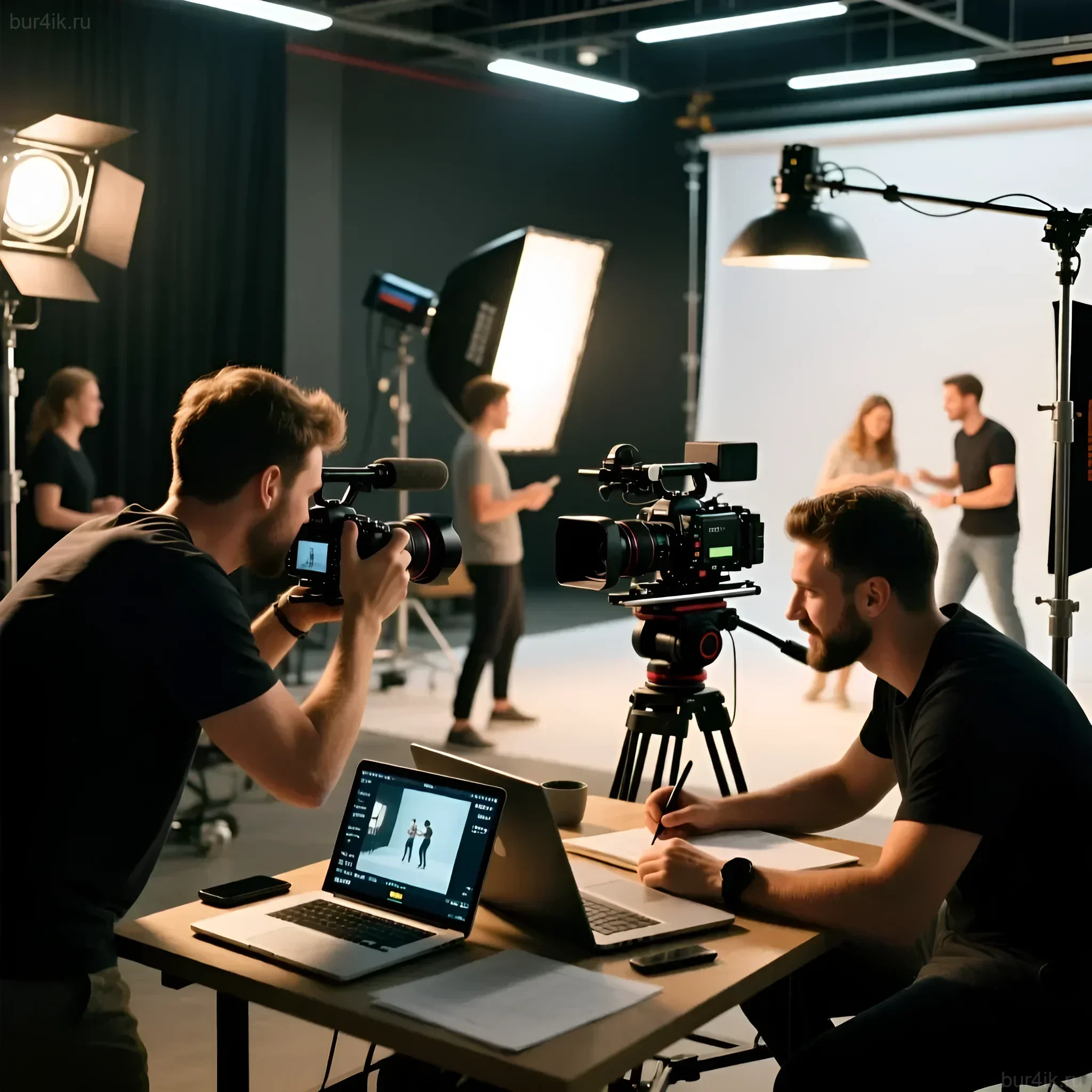
Detailed planning is 90% of successful teamwork. The more details agreed upon before the shoot, the fewer conflicts will arise on set.
Pre-Shoot Preparation Checklist:
1. Sharing Information About the Client and Concept
- Client Preferences: Discuss what is more important to the client: detailed portraits (photo) or dynamics and speech (video).
- Timing: Create a unified, detailed schedule. Mark critical moments that require absolute silence (e.g., ceremonies or toasts).
- Locations: Scout locations together in advance or share photos to assess lighting conditions and potential shooting spots.
2. Technical Coordination
- Artificial Lighting: Determine who will set up their light sources and where. It is crucial that the videographer’s lighting does not interfere with your shots, and vice versa.
- White Balance and Color Profiles: Agree on a consistent or as similar as possible white balance. Discuss which profiles both will shoot in (e.g., Log or neutral).
- Attire: Agree on neutral clothing (black or dark colors) to avoid drawing attention and reflecting off glossy surfaces.
3. Role Distribution
- Determine who will lead the process when staged shots are required. Often, the photographer takes overall direction, and the videographer adapts to maintain dynamism.
- Agree on which scenes prioritize stills (photo) and which prioritize movement and sound (video).
4. Photo and Video on Set: How to Work as a Team
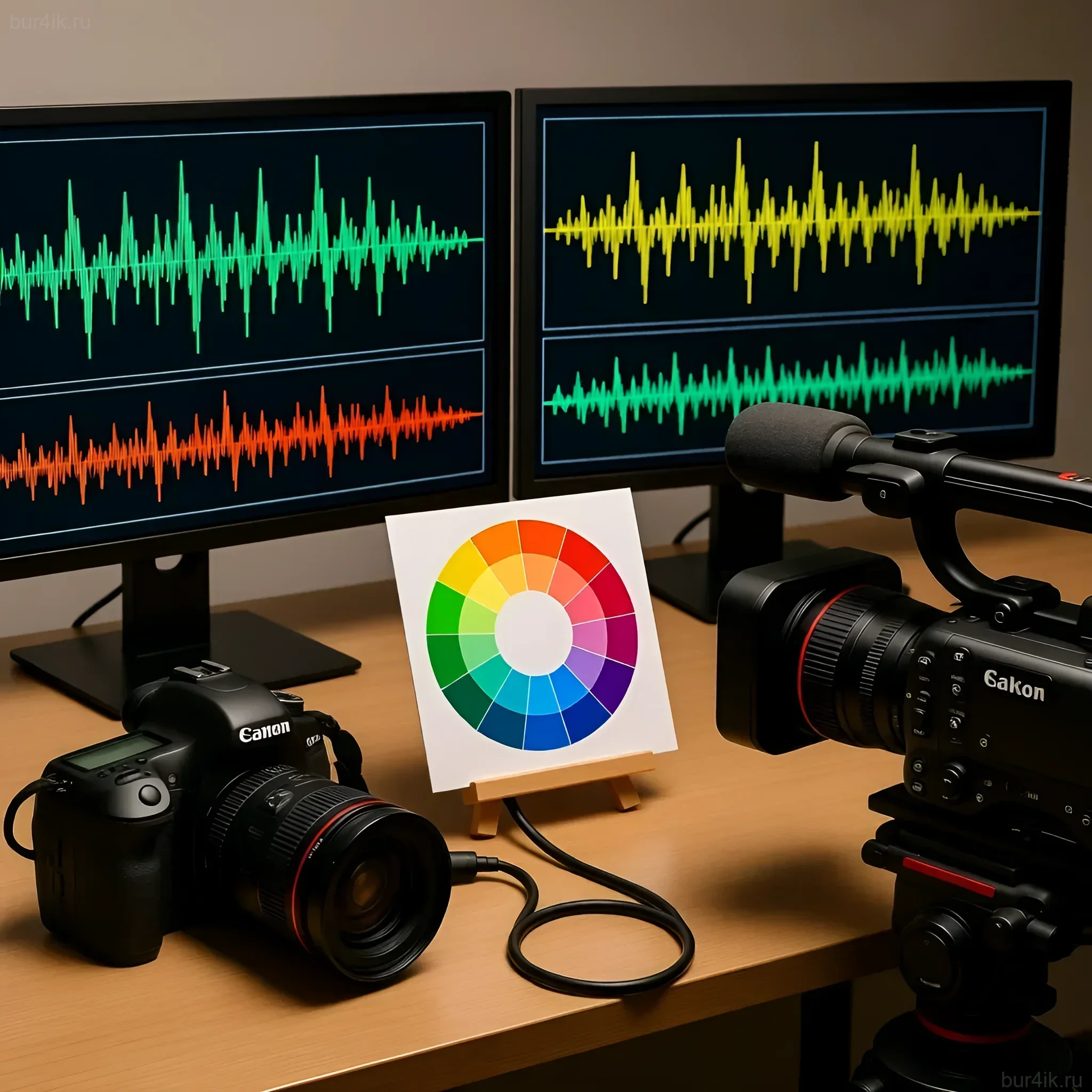
On set, the photographer and videographer should act as a single organism. This requires constant, yet unobtrusive, interaction. The main principle: respect for your colleague’s workspace.
On-Set Etiquette:
- Minimize Interference: Never enter the videographer’s frame or block their lens. If the videographer is shooting a close-up, the photographer should use a wide angle or wait. And vice versa.
- Light Management: If the videographer is using continuous lighting (panels, softboxes), never position your flash in a way that creates harsh shadows or overexposure in their shot.
- “Tandem Dance”: If you are both shooting the same scene, move synchronously and smoothly. If one changes position, the other should either follow or temporarily step back to avoid chaos.
- Gesture Communication: Develop a system of non-verbal signals (e.g., a nod, a raised hand) to indicate readiness or the need for a pause.
- Working with Sound: During the recording of important audio moments (interviews, vows), the photographer should work silently, using silent shooting mode or the mechanical shutter only as a last resort.
Expert Tip: Always take duplicates. Shoot the scene first for photos, and then repeat it, focusing on movement for the videographer. The client will appreciate that both specialists obtained perfect material.
5. Technical Aspects: Synchronization and Compatibility

Technical compatibility between the equipment and workflows of two specialists is the cornerstone of successful post-production.
Synchronizing Settings and Processes:
1. Frame Rate (FPS)
- Standard: If the videographer shoots at 25 frames per second (PAL) or 24 frames per second (NTSC), the photographer should be aware of this. It affects shutter speed.
- 180-Degree Rule: The videographer will likely adhere to the rule: shutter speed should be half the inverse of the FPS (e.g., at 25 fps, shutter speed is 1/50). Photographers should avoid excessively high shutter speeds to prevent a strobing effect when using the videographer’s continuous light.
2. Color Profiles and White Balance
- Lighting: Use the same color temperature (Kelvin) for your light sources to avoid “light conflict.”
- Profiles: If the videographer shoots in a Log profile (S-Log, C-Log, V-Log) for maximum color flexibility, the photographer should understand that their source files (RAW) will look very different. It’s important that the final result (finished photos and videos) harmonizes in color palette.
3. Sound and Timecode
- External Sound: If the videographer uses an external recorder, it’s not just their concern. The photographer must ensure that their loud actions (lens changes, shutter clicks) do not get picked up by the recording.
- Synchronization: In complex multi-camera projects, it’s important to use timecode (if the equipment allows) or at least a clapperboard (or a simple clap at the beginning of a scene) to facilitate synchronization in the editing software.
6. Legal Matters: Collaboration Agreement and Copyright

Professional collaboration should be legally formalized to avoid disputes regarding payment, responsibility, and content usage.
What a Photographer-Videographer Agreement Should Include:
1. Financial Obligations
- Income Distribution: Clearly define the proportions in which client payments will be split (e.g., 50/50 or fixed rates).
- Referral Commission: If one specialist brings a client to the other, specify whether a commission (referral bonus) is paid for this and in what amount.
2. Copyright and Content Usage
- Portfolio: Agree on whether the photographer has the right to use the partner’s video material (e.g., short clips) for their promotion, and vice versa. Is attribution required?
- Rights Transfer: If the client orders a full package, ensure the main contract with the client states that the rights to the photos belong to you, and the rights to the video belong to the videographer (unless full rights are transferred to the client).
3. Responsibility and Force Majeure
- Illness or Equipment Failure: Outline the replacement mechanism. If one of you cannot attend the shoot, who finds a replacement and how, and how is payment distributed in that case?
- Deadlines: Set common deadlines for delivering the finished material to the client to avoid delays caused by one member of the tandem.
7. FAQ: Answers to the Most Popular Questions About Photographer-Videographer Collaboration
Experts have gathered answers to the most common questions that arise when organizing joint work.
Frequently Asked Questions (FAQ):
Q: What if our styles are slightly different?
A: Minor differences are normal. The key is that there’s no conflict in color palette or overall mood. If the photographer’s style is warm and soft, and the videographer’s is contrasting and cool, it can create dissonance for the client. Discuss a unified master preset for joint projects that will make the result harmonious.
Q: Who should communicate with the client and receive payment?
A: It’s recommended to designate one “leader” for the tandem (usually the one who first received the order). They handle all communication and receive full payment, then settle with the partner according to the agreement. This simplifies the process for the client.
Q: How to avoid competition for the best angle?
A: Competition on set is unacceptable. Use the “one shot – two perspectives” principle. While the photographer shoots a close-up from the front, the videographer can shoot a wide shot or details from the back/side. Always exchange positions after 2-3 shots.
Q: Should I share my RAW files with the videographer?
A: Generally, no. The photographer is responsible for the final processing of photos, and the videographer for editing video. Sharing source files may be necessary only in very rare cases (e.g., for creating stills or color synchronization), but this should be stipulated in the contract.
8. Interesting Facts and Inspiring Examples of Collaborations
Collaborations between photographers and videographers often lead to the creation of unique projects that cannot be realized alone. These include not only commercial projects but also creative experiments.
Examples of Successful Synergy:
- “Living Photo” Package: Some tandems offer clients not just photos, but animated images (cinemagraphs) created from video material. This adds uniqueness to the product.
- Documentary Projects: For complex documentary shoots (travel, reportage), having two specialists allows for simultaneous capture of an event from different perspectives, gathering a maximally complete archive.
- Lighting: Inspiring examples often include tandems who have jointly developed a lighting system perfectly suited for both stills and motion, using complex schemes with strobe and continuous light.
Conclusion: The ideal tandem of a photographer and videographer is a professional union based on mutual trust, clear planning, and respect for each other’s work. By mastering these principles, any photographer can not only expand their business but also elevate the quality of their content to a completely new level.