Many talented photographers, having achieved success in one or two genres, fall into a comfort trap. Familiar techniques, predictable lighting conditions, confidence in the result – all this creates an illusion of safety. However, as the practice of bur4ik.ru shows, stagnation in creativity is inevitable if a photographer refuses to experiment. Trying new directions is not just about expanding your portfolio; it’s the key to a deep understanding of light, composition, and your own vision. This article will serve as a comprehensive guide to overcoming the irrational fear of unexplored photographic genres.
Overcome Fear: Why We Are Afraid to Try New Genres in Photography (and How It Affects Development)
The fear of the new in photography has deep psychological roots. This phenomenon, familiar to every creator, can seriously hinder professional growth.
Main Reasons for Fear of Experimentation
- Fear of Failure (Perfectionism): The desire for every new work to be a masterpiece paralyzes. Photographers fear that the result in a new genre will be objectively worse than their usual work.
- Fear of Criticism: Stepping out of your comfort zone makes you more vulnerable. Criticism of work in a genre where you don’t feel like a master is perceived more sharply.
- Stepping Out of Your Comfort Zone: New genres require learning new technical aspects (e.g., shooting in motion, working with flash, specific camera settings), which requires additional effort.
- Inertia of Specialization: The longer a photographer works in one genre (e.g., studio portraiture), the harder it is for them to switch to something completely different (e.g., astrophotography).
The Impact of Fear on Creative Growth
If you don’t try new things, your photographic voice becomes flat. You stop seeing the possibilities of light, composition, and subject matter from unfamiliar angles. Stagnation is a hidden risk. While you only shoot what you know, you miss out on potential breakthroughs in your own style. Many great photographers, like Ansel Adams, started with landscapes, but their true influence grew through mastering techniques and experiments that went beyond pure nature documentation.
Identify Your ‘Comfort Zones’ and ‘Growth Zones’ in Photography: A Practical Exercise

To effectively combat fear, you need to visualize and structure it. This exercise will help you map your current skills and future goals.
Step 1: Inventory Your Comfort Zone
Clearly list the genres where you feel 100% confident. This is your foundation.
- Genre A: (e.g., Wedding reportage). Confidence: 9/10.
- Genre B: (e.g., Natural light portraits). Confidence: 8/10.
- Technical Skills: (e.g., Mastery of aperture, working with a single light source).
Step 2: Create a Wish Map (Growth Zones)
List the genres that pique your interest but seem daunting. Be honest in assessing your current level.
- Genre X (Daunting): (e.g., Black and white street photography). Interest: 10/10. Confidence: 2/10.
- Genre Y (Challenging): (e.g., High-speed water/splash photography). Interest: 7/10. Confidence: 1/10.
Step 3: Visualize Success and Decompose
Take one genre from your Growth Zone and break it down into the smallest, achievable steps.
Example (Genre: Street Photography):
- Step 1 (Theory): Read 2 articles on framing rules in street photography (2 hours).
- Step 2 (Practice, minimal risk): Go out for 30 minutes with your camera, but don’t take a single shot, just observe and aim.
- Step 3 (Practice, low threshold): Take 10 shots in aperture priority mode, without worrying about the final result.
- Step 4 (Analysis): Choose 1 shot that “almost worked” and analyze it.
The main rule: A large task must be broken down into micro-tasks, the successful completion of which is guaranteed.
Where to Start Experimenting: 5 Simple Genres to Broaden Your Photographic Horizons
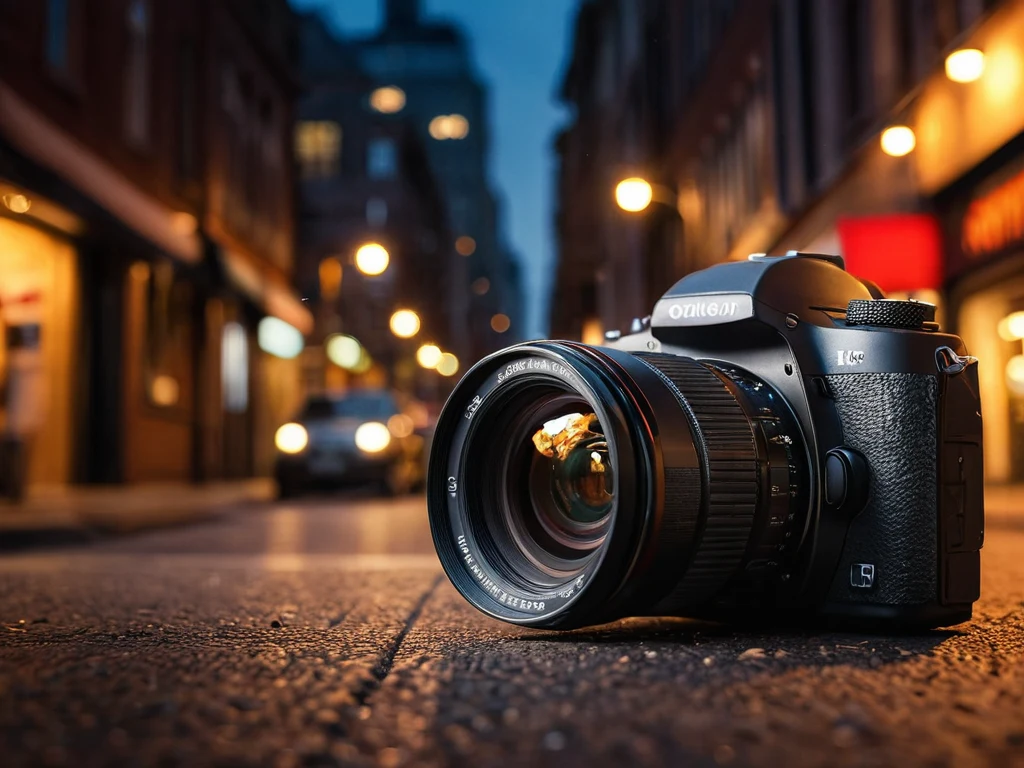
Don’t jump into the most difficult genre for you right away. Start with directions that require minimal changes to your current technical base but offer a new perspective on the world.
1. Minimalism
Essence: Learn to work with empty space, lines, and textures, getting rid of the superfluous. This forces attention to compositional purity.
- Equipment: Any; a prime lens often works well.
- Inspiration: Scandinavian design, works by Andreas Gursky (though complex, a benchmark for a minimalist approach in large formats).
- Where to start: Photographing clouds against a solid sky or reflections in puddles.
2. Black and White Photography (if you only shoot color)
Essence: Shifting focus from color to form, texture, contrast, and tone. Allows for a deeper understanding of the role of light.
- Equipment: A camera with good dynamic range (or a film camera).
- Inspiration: Henri Cartier-Bresson, Ansel Adams.
- Where to start: Photographing scenes with pronounced shadows and light, for example, at midday in bright sun or on a cloudy day in the city.
3. Still Life Photography
Essence: Complete control over light and composition in studio (or home) conditions. Ideal for studying the interaction of light with materials.
- Equipment: Tripod, a couple of desk lamps, backgrounds (cardboard).
- Inspiration: Classic Dutch still lifes, works by Irving Penn.
- Where to start: Photographing a single fruit using two different light sources to study highlights.
4. Food Photography (Basic Level)
Essence: Practicing working with shadows and creating an “appetizing” image. Excellent for developing an understanding of highlights on glossy and matte surfaces.
- Equipment: Natural light from a window, reflectors (white sheet of paper).
- Inspiration: Works used in food magazines (emphasis on flat top lighting).
- Where to start: Photographing a cup of coffee, changing the angle of the light.
5. Mobile Photography as an Experiment
Essence: Shooting with a phone, where the camera is as close to the body as possible. Removes technical pressure, focusing solely on the moment and framing (ideal for street photography).
- Equipment: Smartphone only.
- Inspiration: Projects like *Sh*t on the Road* (even if the theme isn’t close, the approach is interesting).
- Where to start: Daily task: take 5 photos you would never take with a DSLR.
The ‘Safe Experiment’ Technique: How to Minimize the Risk of Failure and Maximize Enjoyment
The main goal is to make the learning process as comfortable and productive as possible. The “Safe Experiment” technique allows you to gain experience without risking ruining your portfolio or falling into despair.
Preparation: Theory as Insurance
Never enter a new genre unprepared. Studying theory reduces anxiety.
- Study the ‘Golden Rules’: Find 5-10 key compositional rules specific to the genre (e.g., the rule of thirds for landscapes, shooting at eye level for reportage).
- Review Works: Study 50 successful works. Ask yourself questions: Where is the light source? What is the depth of field? What mood does the shot convey?
- Lighting Planning: If it’s a studio genre, draw a lighting diagram on paper before you start practicing.
‘Test’ Shoots: Shoot for Yourself
Establish a clear distinction between practice and “real” work.
- Session Purpose: Declare the session “Test.” This removes the pressure to achieve a commercial or exhibition-worthy result.
- Equipment: Use the equipment that bothers you the least. Sometimes shooting with an old “point-and-shoot” or phone helps you focus on light rather than the settings of an expensive camera.
- Limitation: Set a limit. For example: “Today I will shoot 100 macro shots, but I will only allow myself to publish 3.”
Setting Realistic Goals
Your first attempt in a new genre *must* be imperfect. Accept this as a given.
Bad Goal: To take a photo worthy of the National Geographic cover in underwater photography.
Good Goal: To successfully set the white balance in an underwater housing and get a shot with minimal murkiness and blue tint.
Focus on the Process
Focus on what you are *doing*, not on what you are *getting*. If you are practicing a new focusing technique, your success is perfect focus, not the beauty of the subject. The process is the skill you are developing.
Critique Constructively: How to Perceive Feedback and Use It for Growth
An experiment is incomplete without external evaluation. However, reacting to criticism often becomes the second barrier after the fear of trying.
Pitfalls of Perceiving Criticism
Psychologically, criticism, especially in a genre new to us, is perceived as an attack on the person, not the work.
- Offense and Denial: “It’s not his fault, the light was bad” or “He just doesn’t understand this genre.”
- Self-Justification: Attempting to find the cause of failure outside of oneself.
- Ignoring: Deleting a post with criticism before you’ve had a chance to analyze it.
Seeking Constructive Criticism
It’s not enough to just post a photo online. You need to know where and how to ask for feedback.
- Targeted Questions: Never ask: “So, how is it?”. Ask specifically: “To what extent does this shot convey the feeling of anxiety I wanted to put into this composition?” or “Did I use the flash correctly in this frame?”
- Mentors and Communities: Look for communities where peer-to-peer learning is practiced. Ideally, find an experienced mentor who has already gone through this path.
- Separating Criticism: When receiving feedback, mentally separate technical remarks (focus, exposure) from artistic ones (idea, emotion).
Turning Criticism into an Action Plan
Constructive criticism is a roadmap to the next step.
Example:
- Criticism: “This street shot has too much dark sky; it distracts from the main subject.”
- Analysis: Insufficient control of negative space and/or framing.
- Plan: In the next session, focus on using the top edge of the frame as a “frame” rather than a “background.”
The Importance of Self-Criticism
Learn to be your own first and strictest critic. After processing external criticism, review your work through the lens of the knowledge gained in the new genre. Objective self-assessment is critical for growth.
Turn Fear into Fuel: How Regular Experiments Will Help You Find Your Unique Style

Your own photographic style is not a set of rules, but a set of discarded rules. It is born at the intersection of all the genres you have experimented with.
Style as a Synthesis of Experience
Success in finding a unique style is impossible without a broad outlook. When you master minimalism, you will start bringing purity of lines to your portraits. When you work with harsh studio light, you will begin to see natural light on the street in a new way.
- Expanding the Palette: Each new genre adds a tool to your creative toolbox.
- Unexpected Combinations: Your unique style can emerge from a hybrid. For example, a combination of documentary depth and minimalist composition.
Examples of Successful Combinations
Many great photographers did not limit themselves:
- Portrait + Documentary: Creating deep yet stylized images (e.g., Steve McCurry’s works).
- Landscape + Abstraction: Using natural elements to create graphic patterns.
Motivation for Regular Experiments
Overcoming the fear of trying a new genre is not a one-time action, but a mental habit. The more often you force yourself out of your comfort zone, the faster that zone expands.
Remember: The fear of failure in a new genre is negligible compared to the risk of becoming mediocre by repeating the same thing throughout your career. Shoot poorly in a new genre to start shooting well in it in the future. bur4ik.ru urges: choose a genre today that seemed impossible and take the first, even if clumsy, step.