The question of what constitutes ‘good taste’ often seems subjective and elusive. However, from the perspective of experts in design, art, and visual communication, taste is not just a set of personal preferences, but rather the ability to recognize harmony, quality, appropriateness, and balance in the world around us. The bur4ik.ru blog has prepared a comprehensive guide to help readers develop their aesthetic sensitivity and confidently navigate the world of style.
Why It’s Important to Distinguish Good Taste from Bad: 5 Non-Obvious Advantages
Developed taste goes far beyond choosing clothes or home decor. It is a fundamental skill that determines the quality of perception of reality and affects success in various spheres of life.
Here are five key advantages that a developed sense of taste provides:
- Increased Professional Value. In any creative or client-facing field (marketing, photography, architecture, project management), a person with taste can make more balanced and aesthetically refined decisions, which are valued more than mere technical skill.
- Improved Quality of Personal Relationships. Taste is manifested in communication style, gift selection, and organizing leisure activities. It signals attentiveness and respect for a partner.
- Financial Literacy in Consumption. Good taste teaches one to distinguish quality from fleeting fashion. People with taste invest in durable, versatile items rather than chasing cheap, quickly outdated trends.
- Reduced Stress Levels. Living in a harmonious environment, whether at home or at work, is directly linked to psychological comfort and reduced cognitive load.
- Ability to Create a Strong Personal Brand. Your taste is your non-verbal message to the world about who you are and what you value. It forms the first and most lasting impression.
What is ‘Good Taste’: An Analysis of Key Elements (Form, Color, Composition, Context)
Good taste is based on understanding universal principles, not on blindly following fashion. These principles apply to any object – from the font on a business card to the design of a living room.
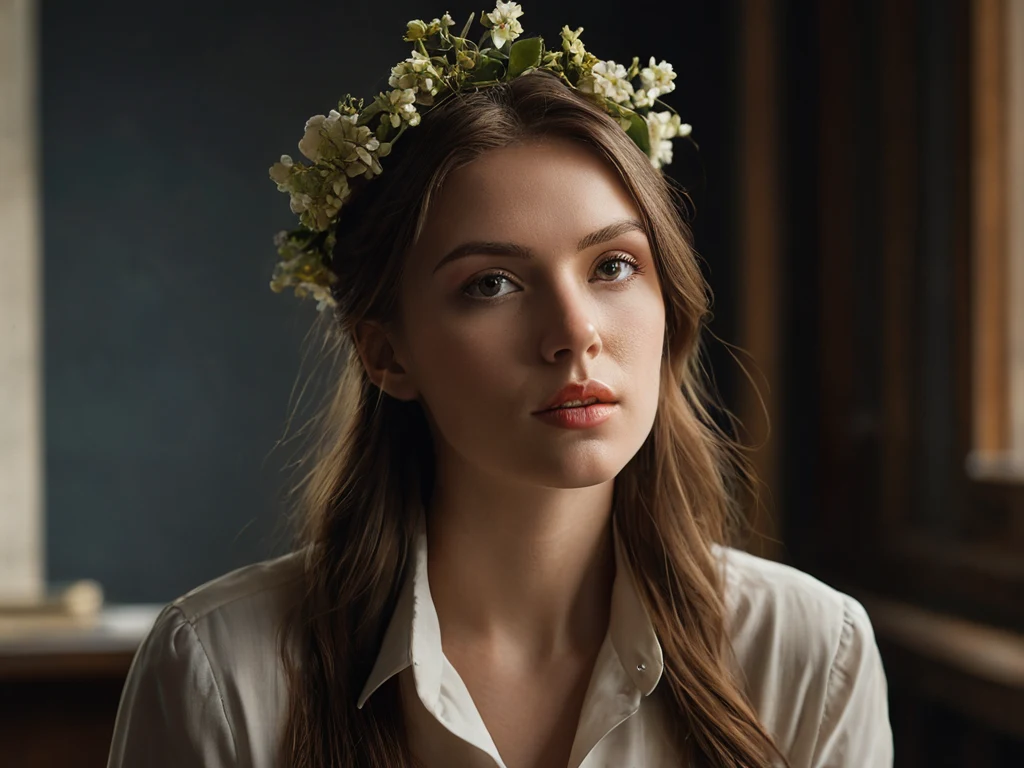
Key components that developed taste analyzes:
1. Form and Proportion
Taste values clarity and logic of form. This includes understanding concepts like the golden ratio, symmetry, asymmetry, and rhythm.
- Example in Architecture: Classical buildings are valued for their balanced proportions, where the ratio of height to width evokes a sense of stability and peace.
- Example in Design: The correct ratio of headline font size to body text (hierarchy).
2. Color and Harmony
Bad taste often uses garish, incompatible colors. Good taste relies on color theory and context.
- Harmonious Combinations: Monochromatic, complementary, or analogous schemes. Taste doesn’t require color to be boring, but it requires it to be meaningful.
- Contextuality: Knowing which colors are appropriate in a formal setting and which are appropriate in a creative one.
3. Composition and Balance
This is the ability to arrange elements so that the viewer’s eye naturally moves across the object without stumbling.
- In Photography: The rule of thirds, negative space, leading lines.
- In Interior Design: Distributing visual weight – heavy furniture should not dominate light elements.
4. Quality and Material
Taste abhors imitation if it is of low quality. It recognizes and values authenticity and craftsmanship.
- Example: Preferring natural wood or quality leather over cheap plastic that imitates these materials.
- Criterion: The feel of an item ‘to the touch’ and its durability.
5. Context and Appropriateness
The most important aspect. An item that is perfect in one context can be a complete failure in another.
- Example: An evening dress worn to a daytime business meeting demonstrates a lack of understanding of context, even if the dress itself is impeccably made.
7 Common Mistakes That Reveal a Lack of Taste (and How to Avoid Them)
Bad taste often manifests not in a lack of money, but in a lack of discipline and knowledge of basic harmony rules. These mistakes are easy to correct if recognized.

Here are seven classic signs that aesthetic intuition needs development:
1. Overcrowding (Visual Clutter)
The desire to fill every free space with decor, patterns, colors, or information. This creates a sense of chaos.
- How to Fix: Adopt the ‘less is more’ rule. Leave ‘air’ (negative space). Remove 50% of decorative elements and see if it looks better.
2. Clumsy Mixing of Brands and Styles
Attempting to combine too many different directions or logos in one outfit or interior.
- Example: Combining Baroque, high-tech, and ethnic motifs without a single connecting thread.
- Tip: Choose one dominant style and use other elements as accents.
3. Ignoring Proportions
Wearing ill-fitting clothes or buying furniture that is too large/small for the space.
- Example: A jacket that is too long and ‘eats up’ the figure, or a huge sofa in a tiny room.
- Solution: Always pay attention to tailoring and the correct scale of objects.
4. Low-Quality Materials
Using substitutes that try to imitate expensive materials but do so unconvincingly (e.g., cheap faux leather imitating crocodile skin).
- Good taste chooses: Simple, but quality wool or cotton, over a flashy fake.
5. Inconsistent Color Palette
Using more than three bright, unrelated colors in one outfit or room.
- How to Fix: Use a neutral base (white, gray, beige, black) and add one or two accent colors.
6. Excessive Following of Fleeting Trends
Buying ultra-fashionable items that will look ridiculous in six months. This is a sign of a lack of personal opinion and style.
- Countermeasure: Invest in classic ‘basic’ items and spend only 10-20% of your budget on trendy accessories.
7. Lack of Focus (Absence of a ‘Main Character’)
In any aesthetic work, there should be an element that attracts the eye first. If everything screams for attention equally loudly, the gaze wanders, and the overall impression is lost.
- In Interior Design: Ideally, this would be a fireplace, a work of art, or an accent wall.
How to Develop Your Taste: 3 Proven Methods (and How Long It Takes)
Taste is a muscle that can and should be trained. It is not an innate gift, but the result of continuous learning and exposure.
bur4ik.ru experts offer a structured approach to developing taste:
Method 1: Studying the Classics (Architecture, Art, Design)
To understand what is good now, you need to understand what has always been good. Classics represent time-tested quality and harmony.
- What to Do: Dedicate 15 minutes daily to studying the works of masters (Rembrandt, Mies van der Rohe, Bauhaus, Le Corbusier).
- Specific Exercise: Open an art history textbook and analyze three paintings: 1) what you like about them; 2) what colors are used; 3) how the balance is constructed.
- Timeline: First noticeable improvements in analysis – after 2-3 months.
Method 2: Analyzing Professionals and Creating Mood Boards
It’s important not just to look, but to *analyze* why a professional’s work works.
- Practice: Create a folder or board (Pinterest/Miro) with works you consider exemplary (photos, interiors, outfits).
- Key Question: Ask yourself, *why* does this shot (or this outfit) look good? Is it the color? Composition? Light? Identify 3-5 common traits in your selected content. This is your developing taste.
- Timeline: Formation of an initial aesthetic vocabulary – 4-6 months.
Method 3: Conscious Experiments and Criticism
Theory is useless without practice. You need to try and get feedback.
- Wardrobe Experiment: Try creating three outfits using only colors you previously ignored, or try a new, unfamiliar composition in photography.
- Seeking Feedback: Show your work or choices to people whose taste you respect (not just friends who will praise you). Ask for constructive criticism.
- Timeline: Confidence in applying new principles – 6-12 months.
Good Taste in Photography: 5 Secrets to Creating Stylish and Memorable Shots
Photography is an ideal area to demonstrate taste, as it requires immediate decisions about composition, light, and post-production.

Good taste in photography distinguishes a technically correct shot from an *aesthetically strong* one.
1. Respect for Negative Space (White Space)
Shots overloaded with objects look unprofessional. Taste understands the value of emptiness.
- Application: Use clear sky, a solid wall, or a blurred background to give the viewer’s eye a rest and focus on the main subject.
2. Color Palette Control (Tone and Mood)
A tasteful shot has a unified, readable tone. This is achieved through minimalism in processing.
- Bad: Overly saturated, ‘eye-popping’ colors that conflict with each other.
- Good: Restrained, harmonious tones – either a warm, soft palette or a cool, cinematic one.
3. Hierarchy of Focus
A tasteful frame instantly tells the viewer what to look at. This is achieved through depth of field (DOF) and sharpness.
- Secret: The main subject should be absolutely sharp. Secondary elements should be softly blurred or intentionally out of frame.
4. Choice of Location and Moment
A photographer’s good taste is evident in what they *choose* to shoot.
- Bad: Photographing a trash can against a beautiful sunset.
- Good: Seeking a minimalist, clean composition where even an ordinary object (like a cup of coffee) looks like a work of art thanks to the light and background.
5. Restrained Post-Processing
Tasteful processing is that which goes unnoticed. It only enhances what was well-shot, rather than correcting mistakes.
- Avoid: Aggressive filters, excessive sharpness, strong HDR, overly strong vignetting.
- Goal: To bring the shot to a state of ‘as if I were there, but a little better’.
Test: Check Your Taste Right Now! (10 Questions with Answers and Analysis)
We invite bur4ik.ru readers to take a quick test to assess their aesthetic orientation.

Choose the answer option that you think is most appropriate.
Question 1. What color combination do you consider most harmonious for a living room?
- A) Bright red, bright yellow, turquoise.
- B) Light gray, cream, one accent dark blue item.
- C) Five different pastel shades mixed without a visible system.
Analysis: Answer B. This is an example of a minimalist, calm palette based on neutrals with a single tonal accent. This is a sign of taste and understanding of the context of a living space.
Question 2. What is more important when choosing a bag?
- A) The presence of the most recognizable logo in a prominent place.
- B) Perfect leather finishing and a thoughtful, functional shape.
- C) The lowest price among fashionable analogues.
Analysis: Answer B. Taste values quality of execution and functionality over conspicuous consumption (A) or saving on quality (C).
Question 3. Which statement about photography do you find more relatable?
- A) The main thing is to capture the moment, the background is not so important.
- B) The light should be perfect, and the composition balanced.
- C) The more details in the frame, the more interesting the shot.
Analysis: Answer B. This reflects the understanding that photography is a controlled art where form (composition and light) is primary.
Question 4. You are ordering business cards. What font will you choose?
- A) Comic Sans or Times New Roman (it’s ‘classic’).
- B) A modern, clean sans-serif (without serifs) or a minimalist serif (with serifs).
- C) The largest and boldest font, so I’ll definitely be noticed.
Analysis: Answer B. Taste in typography implies legibility, readability, and appropriateness of the font for the brand.
Question 5. Which interior do you find more successful?
- A) An interior where every item is bought from the same store, but the style is undefined.
- B) An interior where items from different eras are collected, but they are united by a common texture or tone.
- C) An interior with many expensive but stylistically incompatible items.
Analysis: Answer B. This demonstrates the ability to create a cohesive look by connecting disparate elements through common aesthetic threads (the principle of context).
Question 6. What do you consider a sign of good taste in music?
- A) Knowing the latest chart hits.
- B) The ability to find and appreciate diverse, masterfully performed artists from different genres.
- C) Listening to only one genre, but very loudly.
Analysis: Answer B. Developed taste in music, like in art, is a broad outlook and the ability for deep analysis, not conformity.
Question 7. How do you feel about Photoshop and editing?
- A) The shot should look as realistic as possible, without editing.
- B) Editing should be imperceptible but improve the overall mood and tonality of the shot.
- C) The more effects and HDR, the better.
Analysis: Answer B. Taste implies subtlety. Editing is about perfecting, not creating a new, unnatural reality.
Question 8. When choosing furniture, what is the priority?
- A) That it matches the latest trend, even if it’s uncomfortable.
- B) Functionality, durability, and minimalist, timeless design.
- C) The lowest price, regardless of material.
Analysis: Answer B. Prioritizing durability and functionality over fleeting fashion is a key marker of taste.
Question 9. Your outfit should include:
- A) Maximum accessories to show your passion for fashion.
- B) One or two perfectly matched, quality accents.
- C) Whatever is comfortable, even if it doesn’t match.
Analysis: Answer B. Taste leans towards cleanliness and drawing attention to one or two strong elements.
Question 10. Which decorative element do you find most repulsive?
- A) Too many mirrors in one room.
- B) Artificial flowers that imitate real ones.
- C) Too bright, neon lighting.
Analysis: Answers A, B, C. All of these are manifestations of bad taste: disruption of balance (mirrors), imitation of low quality (artificial flowers), and ignoring context (neon lighting in a living area). Developed taste rejects unnaturalness and chaos.
Test Result: Each correct answer indicates that you intuitively understand the principles of harmony. Continue to train your visual awareness, and your taste will become your reliable advisor in life.