Transitioning from an enthusiastic amateur to a successful professional photographer requires not only honed skills in lighting and composition but also strict attention to financial discipline. Many creative individuals tend to ignore the dull world of numbers, yet it is sound financial accounting that forms the foundation of a stable and profitable photography business. Without a clear understanding of where money is going and where it’s coming from, it’s impossible to scale operations, set adequate prices, and, most importantly, plan for the future.
1. Financial Accounting for Photographers: Why It’s Important and Where to Start

Financial accounting is not just recording transactions; it’s a system that allows you to see the real picture of your business’s health. When a photographer starts taking finances seriously, they gain a powerful tool for decision-making.
Key Benefits of Keeping Records:
- Informed Pricing: Only by knowing all their expenses can a photographer set a price that covers costs and yields the desired profit.
- Tax Optimization: Properly documented expenses allow for a legal reduction of the tax base.
- Cash Flow Control: Understanding when large inflows are expected and when bills need to be paid.
- Profitability Assessment: The ability to accurately determine which types of shoots or services generate the most profit.
First Steps: Separating Finances
The most important rule: never mix personal and business funds. This is the first and most common mistake of novice entrepreneurs.
- Open a Separate Account: Use a separate bank card or account exclusively for business operations (receiving payments, purchasing equipment, paying studio rent).
- Set a Salary for Yourself: Pay yourself a fixed amount (or a percentage of income) as a salary. This helps control personal expenses and prevents draining the business account when needed.
2. Photographer’s Income: All Sources and How to Record Them Correctly

A photographer’s income can be quite diverse, and each source requires careful accounting. Experts recommend categorizing income for a deeper analysis of the profitability of different areas.
Income Categories:
- Core Services: Wedding shoots, portrait sessions, corporate assignments.
- Additional Services: Licensing of images, retouching beyond the package, printing photo books and canvases.
- Passive Income: Selling photos on stock platforms (Shutterstock, Adobe Stock), affiliate programs.
- Educational Activities: Conducting masterclasses, workshops, selling online courses or presets.
Rules for Recording Income:
It’s important to record not only the final amount but also the details of the transaction.
- Transaction Date: When the money was actually received in the account.
- Amount and Currency: Especially relevant for international orders or stock sales.
- Client/Source: Client’s name or platform name (e.g., “Ivanovs’ Wedding” or “Stock Income”).
- Income Type: Which category it belongs to (to understand what brings in the most money).
- Payment Status: Full payment or advance/deposit. Advances should be treated as liabilities until the service is rendered.
3. Photographer’s Expenses: A Complete List and Optimization Methods
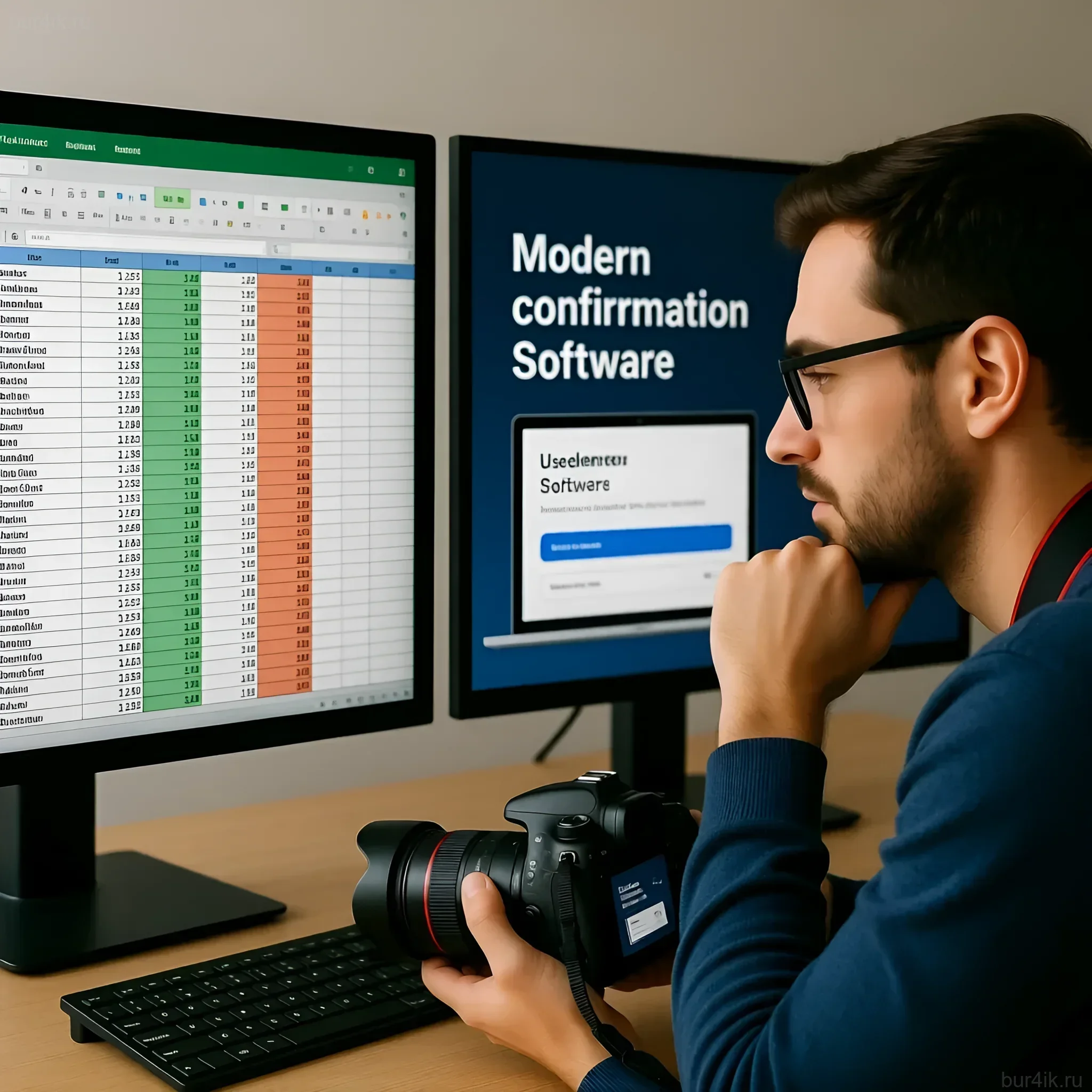
Expenses are the area where photographers most often lose money due to a lack of control. Expenses are divided into two main groups: variable (directly related to a specific shoot) and fixed (independent of the number of orders).
Fixed Operating Expenses (OpEx):
- Rent: Studio, office, or workspace rent.
- Software (SW): Subscriptions to Adobe Creative Cloud (Photoshop, Lightroom), licenses for Capture One.
- Marketing and Promotion: Social media advertising, payment for SMM specialist services, website maintenance (hosting, domain).
- Communication and Internet: Phone, mobile internet.
- Insurance: Equipment insurance or professional liability insurance.
Variable Expenses (COGS — Cost of Goods Sold):
- Subcontractor Labor Costs: Makeup artists, stylists, assistants, second shooters, freelance retouchers.
- Printing Materials: Photo books, photo prints, packaging for client delivery.
- Transportation Costs: Fuel, taxis, tickets related to traveling to shoots.
- Equipment Rental: Lenses, lighting, rented for a specific project.
Expense Optimization: Key Strategies
Smart optimization doesn’t mean cutting necessities but rather increasing the efficiency of spending.
- Automate Subscriptions: Regularly review the services you use. Cancel those not used for more than three months.
- Account for Depreciation: Expensive equipment (cameras, lenses) is not expensed immediately. Its cost is spread over its service life (depreciation). This makes reporting more accurate.
- Seek Wholesale Suppliers: If you frequently print photo books, find a printing house that offers volume discounts.
- Compare Prices: Before buying a new lens, compare prices at 3-5 stores. Saving even 5-10% on expensive equipment is significant.
4. Choosing a Financial Accounting Tool: From Excel to Specialized Services

The choice of tool depends on the volume of your business and personal preferences. The main thing is that the tool is convenient, accessible, and allows for quick data entry.
1. Simple Solutions: Spreadsheets (Excel/Google Sheets)
Ideal for beginner photographers or those with up to 10 orders per month.
- Pros: Free, fully customizable, no learning curve.
- Cons: Easy to make mistakes with manual formula entry, no automatic bank synchronization, difficult to scale.
2. Specialized Mobile Apps and Services
Suitable for actively working freelancers and sole proprietors.
- Russian Services: Many photographers use simplified versions of accounting software (e.g., 1C:Accounting or My Business) or apps for the self-employed, which automatically generate receipts and calculate taxes.
- International/Universal: Trello, Asana, or specialized CRMs for photographers (e.g., HoneyBook or Dubsado), which often include invoicing and payment tracking features.
- Personal Finance Apps: Apps like Zen-Money or CoinKeeper can be adapted for business transaction tracking if the business account is small.
Key Tool Requirements:
Whatever tool is chosen, it should provide:
- Mobility: The ability to record an expense immediately while you are at the store or on location.
- Reporting: Generation of simple reports (income minus expenses).
- Backup: Guarantee of data safety.
5. Taxes for Photographers: What You Need to Know and How to Pay

Tax legislation in Russia offers photographers several convenient regimes that significantly simplify record-keeping and reporting. The choice of regime depends on annual turnover and the presence of hired employees.
Popular Tax Regimes for Photographers:
1. Self-Employment (Tax on Professional Income, NPD):
- Essence: The simplest and most popular regime for freelancers. No tax returns are required.
- Rate: 4% when working with individuals, 6% with legal entities and sole proprietors.
- Accounting: All accounting is done through the “My Tax” app, which automatically generates receipts and calculates the amount due.
2. Individual Entrepreneur (IP) on Simplified Tax System (STS):
- Essence: Suitable for photographers with high turnover or those planning to hire employees.
- STS “Income”: Tax is paid on the total income (usually 6%). No expense accounting is required.
- STS “Income minus Expenses”: Tax is paid on net profit (usually 15%). Requires meticulous accounting of all documented expenses.
Important Tip: If you have chosen STS “Income minus Expenses,” keep all receipts, contracts, and invoices. Only documented expenses can be used to reduce the tax base.
6. Budget Planning and Financial Analysis: How to Assess Your Photography Business’s Profitability

Accounting for the sake of accounting is useless. The main goal is to use the data to improve the business. Financial analysis helps answer critical questions: “Am I earning or just working a lot?” and “Where should I invest to grow?”
Key Financial Metrics:
- Gross Profit: Revenue minus Cost of Goods Sold (COGS). Shows the efficiency of a specific shoot.
- Net Profit: Gross Profit minus all operating expenses (OpEx), taxes, and interest. This is the money left for you.
- Profit Margin: Expressed as a percentage (Net Profit / Revenue * 100%). If your profit margin is below 20%, you may need to review your pricing or reduce expenses.
- Marketing ROI (Return on Investment): How much money each thousand rubles invested in advertising brought in. This is critically important for evaluating the effectiveness of advertising channels.
Creating a Budget: The 50/30/20 Rule for Photographers
Experts recommend allocating every ruble earned from the business as follows:
- 50% — Operating Expenses and Cost of Goods Sold: Studio rent, software, subcontractors.
- 30% — Photographer’s Salary (Owner): Money transferred to your personal account.
- 20% — Reinvestment and Reserve: Savings for purchasing new equipment, training, and a financial safety net for the business.
7. FAQ: Answers to the Most Popular Questions About Financial Accounting for Photographers

“How often should I enter data into the accounting system?”
Answer: Ideally, daily. Experts insist on the principle of “immediately after the transaction.” If you bought something for work, record it as an expense immediately. Postponing accounting until the end of the week or month leads to errors and loss of some receipts.
“I lost the receipt for a lens. Can I deduct it as an expense?”
Answer: For tax purposes (especially with STS “Income minus Expenses”), you need documentary proof. If you don’t have a receipt, but you have a bank statement and, for example, a warranty card or a purchase agreement, it might help, but it’s always best to have a complete set of documents.
“Do I need to account for the time spent working in financial accounting?”
Answer: Time is not a financial expense, but it is a critical resource. Time tracking helps determine your effective hourly rate and understand if too much time is being spent on low-paying or unprofitable tasks (e.g., excessive retouching).
8. Interesting Facts and Useful Resources for Photographer’s Financial Literacy
Financial literacy is a continuous process. Possessing this knowledge distinguishes a craftsman from an entrepreneur.
Interesting Facts About Photography Finances:
- The 1/3 Rule: Many successful studios adhere to the rule that the ideal price for a shoot should be divided approximately as follows: 1/3 — operating expenses and cost of goods sold, 1/3 — taxes and reinvestment, 1/3 — photographer’s net profit.
- “Hidden” Expenses: Photographers often forget to account for data storage costs (cloud services, external drives), although this is a mandatory part of the cost of service.
- Psychological Effect: Studies show that photographers who regularly set aside 20% of their income for reserves feel more confident when raising prices and negotiating with clients.
Recommended Resources:
To deepen your knowledge in financial accounting and taxation, bur4ik.ru experts recommend:
- Books: “Rich Dad Poor Dad” by Robert Kiyosaki (to change mindset), “Profit First” by Mike Michalowicz (for practical cash flow management).
- Online Courses: Programs from leading online schools on the basics of accounting for small businesses and freelancers.
- Consultants: Regular (at least once a year) consultation with a tax specialist or accountant specializing in sole proprietors or the self-employed to ensure you are using all available benefits and properly documenting everything.
Conclusion: Financial accounting is not a punishment but a powerful tool for growth. Start small today: separate your accounts, create a simple spreadsheet, and systematically enter data. In a few months, you will have a clear picture of your business and be able to make decisions based not on intuition but on solid numbers.