Creative thinking is not a mystical gift available only to the chosen few. It is a skill that, like a muscle, requires regular training and targeted exercises. For photographers striving to go beyond ordinary shots and create truly memorable visual content, developing creativity becomes not just a desirable addition, but a critically important tool.
Unleash Your Potential: Why Creative Thinking Exercises Are Important for Everyone (and How They Help in Photography)
Creative thinking is the ability to generate new ideas, find unconventional solutions, and see familiar things from a different perspective. It is the foundation of any innovative process, whether it’s developing a new product, writing text, or creating an image.
Why is this important for everyone?
- Improves problem-solving skills in everyday life and at work.
- Increases adaptability to changing conditions.
- Reduces stress levels by shifting focus.
The connection between creative thinking and photography is undeniable. It is creativity that defines:
- Composition: Not just following the rule of thirds, but creating a dynamic or unexpected frame.
- Choice of angle: Finding a point of view that hasn’t been used before.
- Editing: Applying unconventional color and tone techniques that reflect your vision.
- Overall vision: The ability to tell deep stories through a series of shots.
The myth of innate talent must be dispelled. Great photographers became great through years of dedicated practice and experimentation. This article from bur4ik.ru presents 393 exercises (within thematic blocks) that will help you systematically enhance your creative potential and transform your photographic vision.
Brain Warm-up: 5 Simple Exercises to Start Developing Creative Thinking
These exercises don’t require complex equipment or a lot of time. They are ideal for a daily warm-up and a quick shift in thinking modes.
Exercise 1: ‘Random Word’
The essence: Use any random word generator (online or from a dictionary) and use the generated word as a starting point for a photo project.
- Interpretation: The word “Ether.” Photo interpretation options: fog, smoke, a light veil on the model, minimalist lighting, abstract long-exposure shooting.
- Duration: 30 minutes to generate 5 ideas and choose one for shooting.
Exercise 2: ‘Alternative Uses’
The essence: Choose an ordinary object (e.g., a spoon, a clothespin, a glass) and come up with 10 unconventional ways to use it EXCLUSIVELY in the context of photography.
- Example: A clothespin can serve as a background holder, a mini-tripod, an element for holding a reflector, or even part of a decorative pattern in a shot.
Exercise 3: ‘What If…?’
The essence: Ask yourself a hypothetical, often absurd question and try to answer it visually.
- Question: What if rain fell upwards? What if people communicated only through shadows?
- Visual Answer: Finding scenes where gravity is distorted, or a series of portraits where emotions are conveyed solely through the shape of shadows on a wall.
Exercise 4: ‘Associative Chain’
The essence: Start with one object (e.g., ‘old tree’) and create a chain of 15 related concepts, moving from the literal to the abstract.
- Chain: Tree -> Bark -> Texture -> Wrinkles -> Age -> Wisdom -> Silence -> Night -> Moon -> Light -> Glare -> Water -> Reflection -> Illusion -> Dream. Each word is a potential shot.
Exercise 5: ‘Perspective Flip’
The essence: Find the most common object in your room (e.g., a doorknob, an electrical outlet) and take 20 photos, trying to show it from completely new, non-human angles.
- Technique: Using macro, shooting through glass, shooting from floor or ceiling level. The goal is to make the viewer question what they are seeing.
Diving Deeper into Creativity: 10 Exercises for Developing Imagination and Finding New Ideas
We move on to more complex tasks that require planning and stepping outside your comfort zone.
Exercise 6: ‘Wordless Photo Story’
Create a series of 5-7 frames that tell a complete, emotionally rich story (beginning, climax, resolution) without a single caption or text.
- Focus: On sequence, body language, and object symbolism.
Exercise 7: ‘Limited Palette’
Shoot for a day using only three pre-selected colors (e.g., only blue, orange, and white). This forces the brain to seek composition not by form, but by color interaction.
Exercise 8: ‘Genre Blending’
Consciously combine elements that rarely coexist. Shoot an urban landscape in the Baroque style or create a macro portrait of a person using studio lighting techniques for landscapes.
Exercise 9: ‘Photo Collage’
Take 10-15 shots that reflect your current inner state (e.g., ‘anxiety’ or ‘anticipation’). Then select the best ones and create a digital or physical collage where individual elements interact with each other.
Exercise 10: ‘Viewer’s Challenge’
Ask a friend, family member, or social media follower to give you a maximally vague or complex assignment: “Photograph hope” or “Shoot the invisible.”
Exercise 11: ‘Photo Riddle’
Create an image that requires deciphering. Use optical illusions, anamorphic art, or play with light and shadow to create a visual puzzle.
Exercise 12: ‘Imitating Famous Artists’
Choose a famous painter (Caravaggio, Monet, Rembrandt) and try to recreate their painting techniques, lighting, and atmosphere in photography. This directly trains the understanding of light and shadow.
Exercise 13: ‘Photo Metaphor’
Choose an abstract concept (e.g., ‘freedom,’ ‘bureaucracy,’ ‘loneliness’) and create a single, maximally concise frame that expresses it. This is pure work with symbolism.
Exercise 14: ‘Shooting with Eyes Closed’
ATTENTION: Practice only in a safe, familiar environment (e.g., at home). Place the camera on a surface, close your eyes, feel for the settings, and take one shot, relying solely on tactile sensations and your mental image. Analyze the result.
Exercise 15: ‘Photo Diary of One Object’
Choose one object (e.g., a cup on a table). Photograph it daily for a week at the same time, changing only the lighting, angle, and background. The goal is to find 7 completely different stories in one static object.
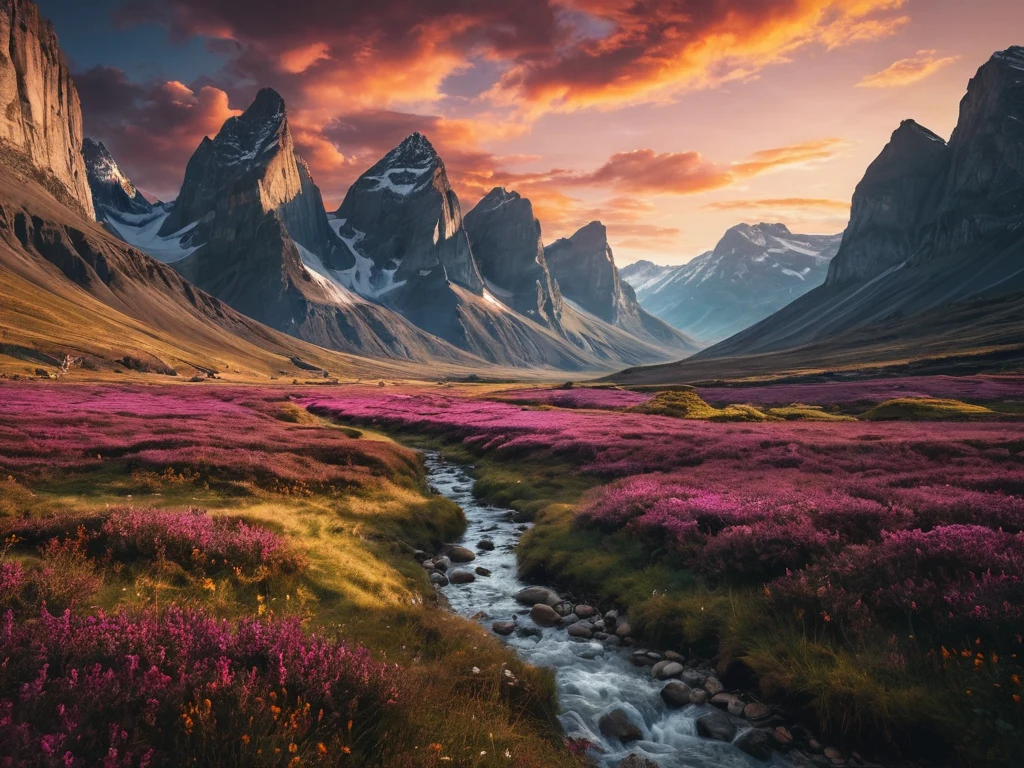
Overcoming Creative Blocks: 7 Exercises for When Inspiration Has Left You
Creative block is familiar to everyone. The main rule is not to give up, but to change tactics. Use limitations as a catalyst.
Exercise 16: ‘Change of Scenery’
If you always shoot in the city, go to the forest. If you love nature, spend a day in an industrial area. A physical change of environment instantly alters the set of available visual stimuli.
Exercise 17: ‘Working with Limitations’
Set yourself strict, absurd constraints to make your brain look for solutions:
- Take 10 shots in 5 minutes.
- Use only a 50mm lens (or only a phone).
- Shoot only what fits within one square meter.
- Shoot only at a shutter speed of 1/1000 sec.
Exercise 18: ‘Analyzing Other Photographers’ Work’
Open an album or website of a master you admire. Don’t just look; conduct an active analysis: what is the lighting? What is the aperture (presumably)? What is the purpose of this shot? Try to imitate the intention, not just copy the frame.
Exercise 19: ‘Focus on Details’
Sometimes the “big picture” is intimidating. Switch to the macro world. Look for textures, patterns, dew drops, cracks in the asphalt. Try to turn a micro-detail into an abstract masterpiece.
Exercise 20: ‘Black and White Photography’
If you’re used to relying on color, forcibly switch your camera to monochrome mode. This forces the brain to work with form, tone, contrast, and texture, bypassing the emotional impact of color.
Exercise 21: ‘Free Shooting’
Grab your camera and go for a walk. Forbid yourself from thinking about the goal, composition, or result. Just walk and press the shutter every time something attracts your gaze. This restores an intuitive connection with the camera.
Exercise 22: ‘Returning to the Basics’
When your brain is tired of creativity, return to the technical fundamentals. Try to achieve perfect exposure 50 times using only manual mode. Perfect mastery of technique frees up space for pure creativity.
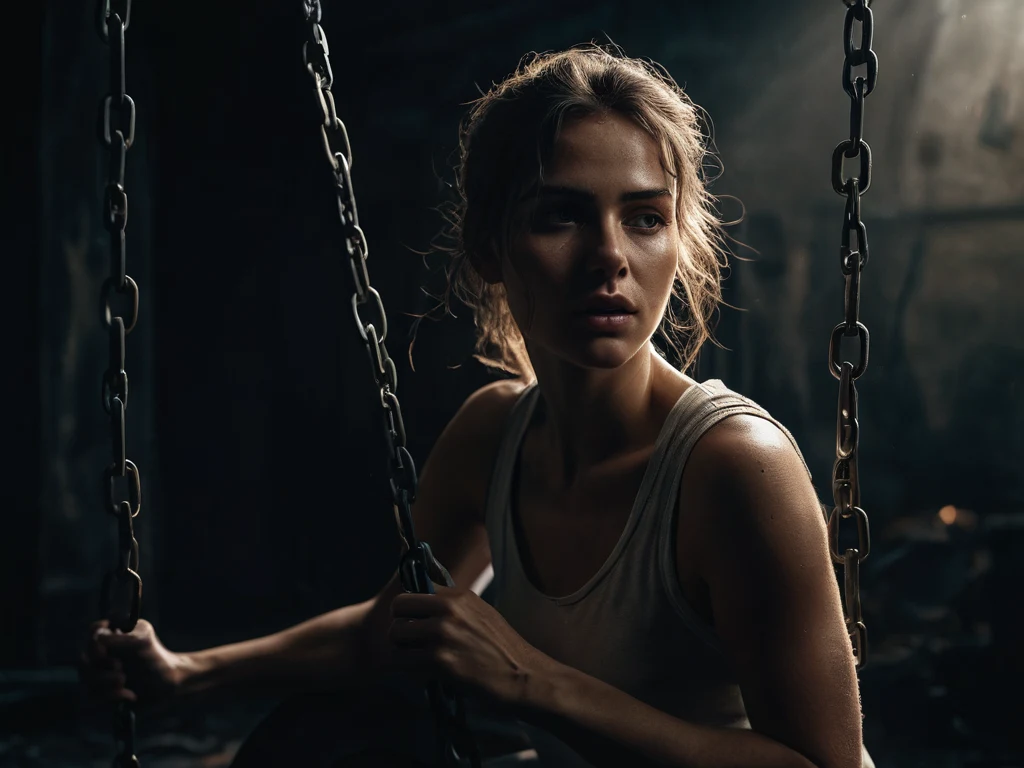
How to Make Creative Thinking Exercises a Habit: Creating a System
Exercises provide a burst of ideas, but sustained growth requires a system. bur4ik.ru recommends integrating creative practices into your routine.
Creating a Schedule and Allocating Time
Creativity doesn’t wait for free time; it needs to be planned.
- Daily Warm-up: 15 minutes in the morning for ‘Random Word’ or ‘Perspective Flip.’
- Weekly Challenge: Dedicate one weekend day to a comprehensive exercise (e.g., ‘Genre Blending’ or ‘Photo Story’).
Keeping an Idea Photo Journal
Don’t rely on memory. Keep a physical or digital notebook exclusively for:
- Raw ideas.
- Strange observations.
- Random quotes that could become themes.
- Composition sketches.
Finding Like-Minded People
Creativity thrives on exchange. Find a partner or a small group who also practices these exercises. Regular sharing of results and constructive criticism is a powerful motivator.
Using Online Resources
Communities, forums, and thematic groups often host challenges that are already structured exercises. Participate to see others’ approaches to the same tasks.
The Importance of Regularity and Patience
Developing creative thinking is a marathon. Don’t get discouraged if the first 20 attempts seem unsuccessful. Every attempt trains neural connections. Regularity is more important than perfect execution.
How to Track Progress
Once a month, review your work done through these exercises. Compare your first ‘Shooting with Eyes Closed’ attempts with the latest ones. You will see how your vision of composition and light has changed.

Inspiration in Every Frame: Resources for Further Development of Creative Thinking in Photography
To constantly fuel your system, you need a continuously replenished source of inspiration and knowledge.
Useful Books on Photography and Creativity
- For example: Books on color theory and composition, biographies of innovative photographers.
- Classics: Study works on storytelling and visual narrative.
Online Course Recommendations
Look for courses that don’t teach technique but focus on the artistic side: conceptual photography, working with symbolism, art direction.
Inspiring Photo Blogs and Websites
Subscribe to resources that showcase not only commercial work but also personal, experimental projects. Look for photographers who use the camera as a tool for exploring the world, not just for documentation.
Mobile Photography Apps
Use apps that offer unconventional shooting or post-processing modes (e.g., film photography simulation, creative filters). This forces the brain to adapt to new tools.
Invitation to Discussion
bur4ik.ru readers, share in the comments which of these 393 exercises (or their variations) gave you the most unexpected result. What is the strangest object you tried to photograph using the ‘Alternative Uses’ method?
Conclusion
Creative thinking is the oxygen for photography. It distinguishes an operator from an artist. By applying a systematic approach to training creativity through these exercises, you will not just improve your shots – you will change your way of interacting with reality. Start today, and every subsequent shot will be a step towards your unique visual language.